Malta came under British domination in 1800 after the Maltese had risen against the French Republican forces that had ousted the Order of St John in 1798. The Treaty of Paris, signed in 1814, declared Malta a British possession.
Malta thus passed into its next and final colonial phase which lasted till 1964. During this period the Maltese were introduced to an Anglo-Saxon way of life and came face to face with a culture which was rather novel to them. This included many new elements including food recipes, ways of doing things, the English language, the system of government, and education.
Mdina remained a quiet city, nearly forgotten by the new rulers. It continued to be called the silent city and nothing new was introduced by the colonisers to change the ways of the residents and their environment. Mdina remained the seat of the Roman Catholic diocese where the bishop had his cathedral and his palace. No other administrative power resided in the old capital of Malta.
British Malta was a naval base of the Empire, coordinated from Valletta. Soldiers and sailors, naval vessels and later on military aircraft, strengthened Malta’s mission as a sentinel strategically placed in the middle of the Mediterranean Sea. The colonial government was headed by a governor who represented the British Government and the Sovereign.
During the British period Malta also experienced the first attempts at organised tourism especially in the years following World War Two, but such activity was still in its embryonic stage as investment was too little and exposure to the outside world was largely limited to the British market.
Clothing
The British colonial period started with people wearing clothes similar to those worn in the last years of the Order in Malta. With time new fashion began to appear and this was adopted by the locals.
In the last decades of the nineteenth century women wore clothes with high collars which were held in place by collar stays. Blouses and dresses were full in front with a puffed ‘pigeon breast’ shape which protruded over the narrow waist. A sash or belt was used to accentuate the waist that sloped from back to front.
Men used three piece suits with patterned fabrics for shirts. Knee-length topcoats were also used. Later on items such as the blazer were introduced for casual wear. Formal dress shirt collars were turned over or pressed into ‘wings’. Dress shirts had a stiff front. Striped shirts were used mostly for informal occasions. Neckties were worn for different occasions with bow ties being used for evening dress.
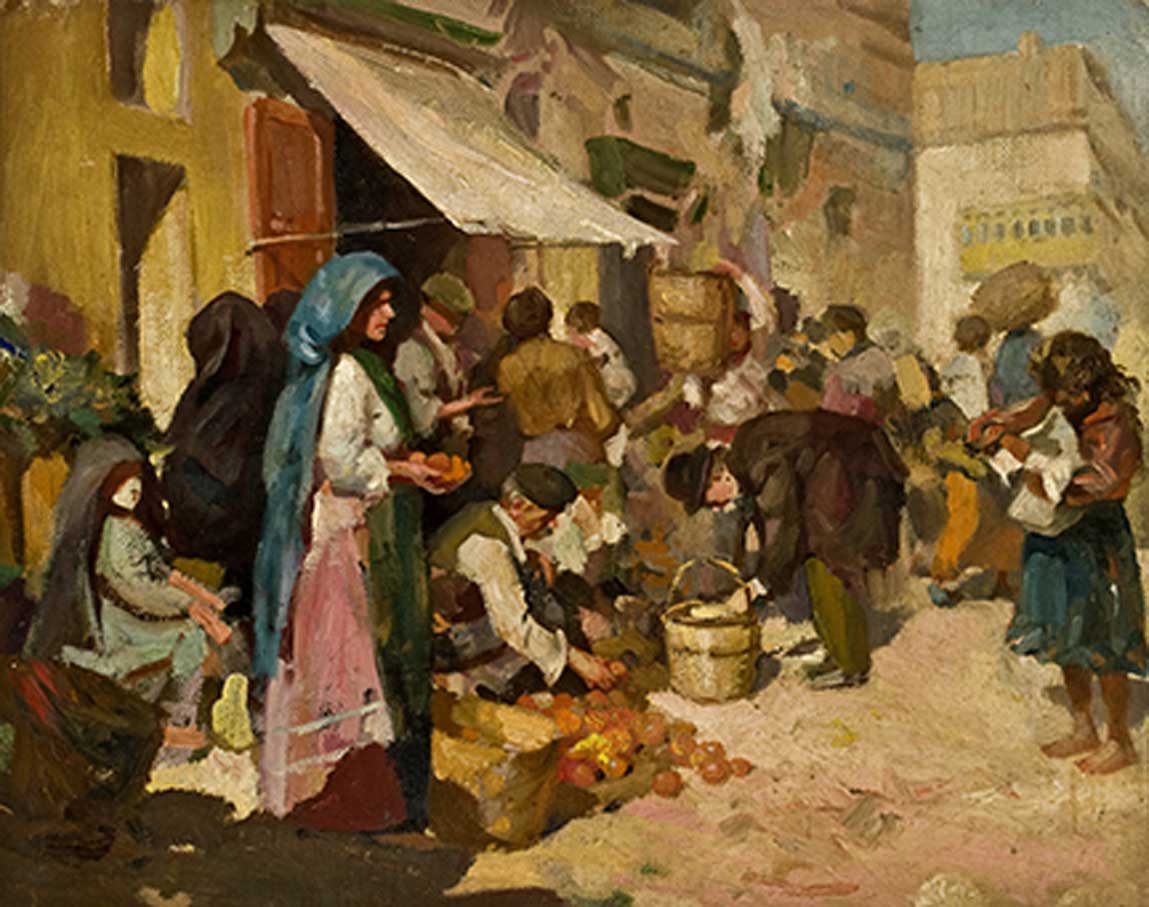
For everyday use especially among the Maltese less wealthy, the għonnella continued to be the everyday garment for women.
Food
With the coming of the British, the Maltese became acquainted with new food items and various novel recipes. Much of the food that the Maltese began to prepare and to eat was associated with the British Services and related to British traditions and usage. For example, the English breakfast, meat and ‘two veg’, followed by pudding began to feature and became mainstays in restaurants and hotels. Slowly such eating habits began to filter into the Maltese home and into the kitchen. Other food items available included potato chips, cottage pie, turkey, corned beef and butter. During the Christmas season English sweets such as the Christmas cake and pudding became an integral part of the season’s offereings.
The Maltese began to add dishes which were very British to what had become traditional recipes. The rabbit dish was now joined by the roast beef. New cheeses supplemented the Maltese ġbejna. The family table looked more like the English one. Tea became a favourite and always-present feature at all times of the day.
Bread of course remained a staple food, while the vegetable soup or minestra continued to be a favourite. Pasta of various types mingled with the newcomers – potatoes, tomatoes – while wine had to compete with whiskey and beer.
Daily Life
Everyday life in the Maltese archipelago was determined and conditioned by the large presence of British military and naval personnel in a bustling colony. Trade and commercial opportunities increased and this especially so when the Suez Canal was opened in 1869. Dockyard services, provisioning and ship-chandelling increased and offered further opportunities for the Maltese with regard to employment.
The Maltese were also introduced to the game of football with the Malta Football Association being established in 1900.
English too became a widespread language where more and more people decided to learn it. Knowing English meant that one had better opportunities to find employment especially with the services, the colonial government and with other organisations and companies.
An education system was built from nothing and it began to take shape during the nineteenth century. In 1946 it became compulsory for all. Schools were built all over Malta and Gozo and the curriculum followed the English pattern.
The population grew rapidly but many Maltese lived in poverty. As employment was not easy to find many decided to seek opportunities abroad. Emigration to various destinations became an option which many grasped, travelling to Australia, the United States, Canada, Britain and many other places in search of a better future. It is calculated that there are hundreds of thousands of Maltese spread all over the world.
For some time, people in Malta could travel by train or by tram. These means of transport existed between the last decades of the nineteenth and the first decades of the twentieth century. Then the route bus was introduced and it took over as the main public transport facility.