Learn
•
Ancient fish, new tech: AI supports offshore wind monitoring
Dr Liam Butler, a computational biologist at the University of Malta, is senior author of a new study in the ICES Journal of Marine Science presenting an artificial intelligence framework to help predict habitat use by protected marine species and guide offshore wind planning. The paper, published open access in the ICES Journal of Marine Science, is available online.
The publication reflects the broader scope of Dr Butler’s work at UM, where he is applying artificial intelligence to complex decision-making problems in both health and the environment. His research includes AI-based cardiovascular-risk detection using smartwatch data, alongside environmental monitoring and ecological forecasting tools that can support conservation and environmental planning.
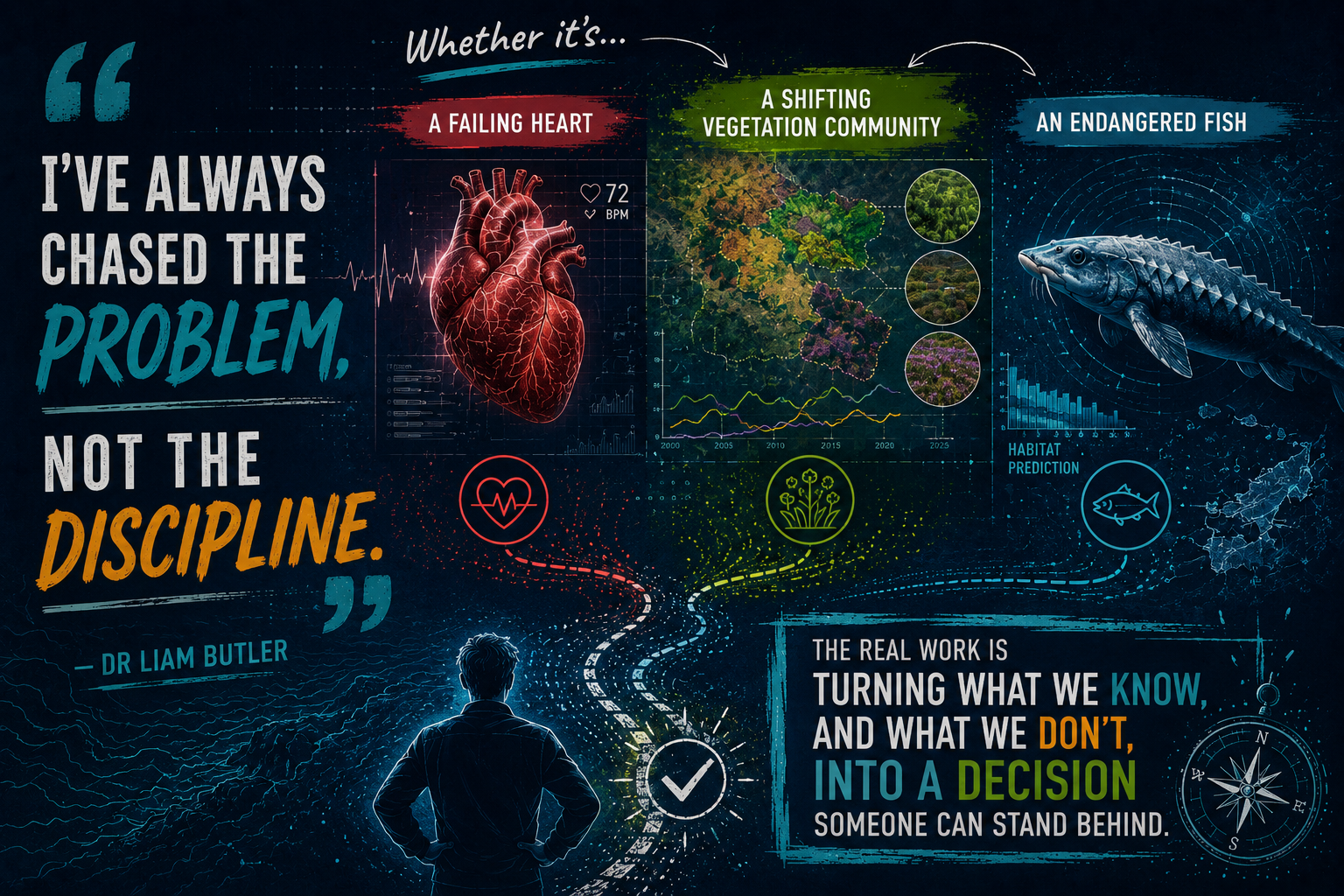
“I’ve always chased the problem, not the discipline,” Dr Butler said. “Whether it’s a failing heart, a changing plant community or an endangered fish, the real work is turning what we know, and what we don’t, into a decision someone can stand behind.”
The study evolved from a collaboration with author Dr Evan Ingram that began while Dr Butler was mentoring him during his PhD research at Stony Brook University, NY, and illustrates the international partnerships that underpin Dr Butler’s wider research portfolio. Using the endangered Atlantic Sturgeon as a case study, the team developed what the authors describe as 'ecological triage tools'. Offshore wind is expanding rapidly as countries race to decarbonise their energy systems, but development often moves faster than assessment of effects on the creatures below the surface. For species that are hard to track, the developed tools could, therefore, be early, defensible predictions designed to help managers target monitoring and precautionary planning where ecological risk is highest.
Although the case study focuses on a North American species, the relevance for Malta is closer to home than it might first appear. Malta is now advancing offshore renewable-energy planning, including floating offshore wind in waters beyond its territorial sea. That places the country in a similar position to the one addressed by the study: deciding where marine infrastructure can be developed while protecting species that are difficult to observe consistently at sea.
This type of science is already developing in Malta, with researchers connected to the University of Malta and partner institutions mapping habitat suitability for species such as bottlenose dolphins, alongside wider conservation and EU-funded efforts to identify sensitive areas for turtles, dolphins, seabirds and other marine life. Dr Butler’s approach could complement that growing evidence base by adapting similar AI tools for Mediterranean species, supporting more precautionary planning as Malta shapes its renewable-energy future.
Latest articles


WasteServ employees complete Maltese language course
Learn · 22 Oct 2026


