Students
•
University of Malta hosts SEA-EU Erasmus+ BIP on Marine Data Literacy
|
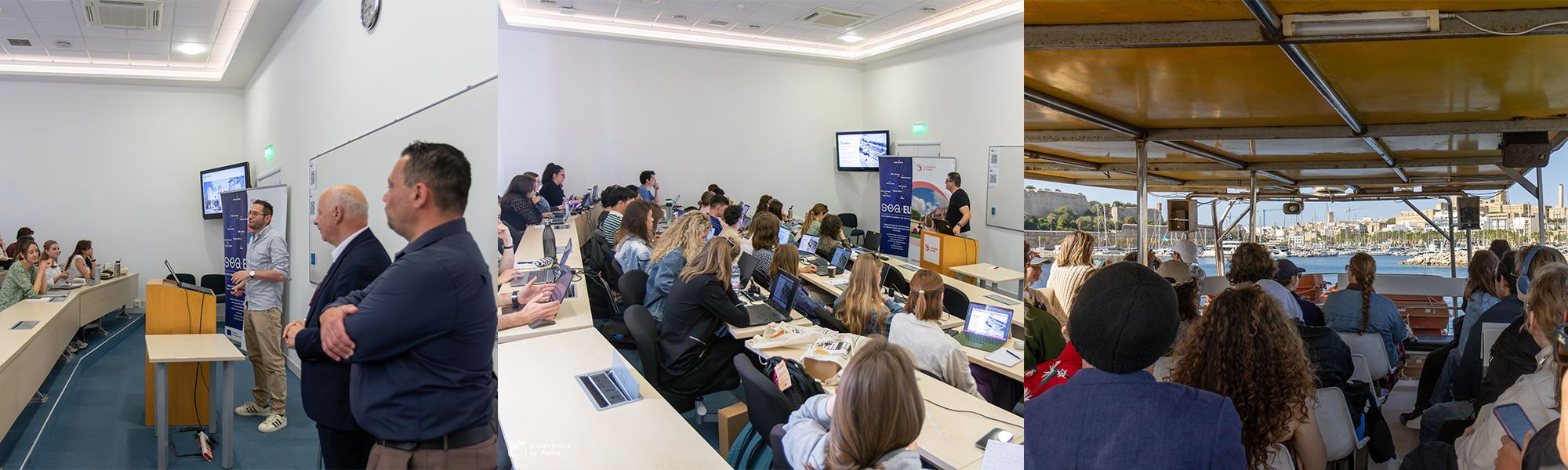
The University of Malta hosted the 2026 edition of the SEA-EU Erasmus+ Blended Intensive Programme (BIP) on Marine Data Literacy, welcoming students and lecturers from across the European University of the Seas alliance for a week of practical training, international collaboration, and marine science learning. The face-to-face component of the programme was officially opened at the University's Valletta Campus on Monday 4 May 2026 by Prof. Alfred Vella, Rector of the University of Malta, who welcomed the students and visiting lecturers. His opening remarks marked the start of the mobility week, which followed the online component of ten sessions of the BIP. The Marine Data Literacy programme has developed into a recurring SEA-EU educational initiative, helping students acquire the skills needed to find, analyse, interpret, and communicate marine data. The first edition was held online in 2021 and was followed by 41 students. It was then hosted in Cádiz in 2022, with 36 students, in Split in 2023, with 49 students, and in Gdańsk in 2025, with 30 students. With the Malta cohort, the course has now reached almost 200 students across the SEA-EU alliance. This year's edition brought together 35 students from several SEA-EU partner universities, including the University of Brest, Kiel University, the University of Algarve, the University of Cádiz, the University of Gdańsk, the University of Malta, and the University of Split. Lecturers from Malta, Cádiz, Gdańsk, Split, Algarve, and Kiel contributed to the teaching programme, creating an international learning environment that reflected the collaborative spirit of SEA-EU. The mobility week ran from Sunday 3 May to Saturday 9 May 2026. Students followed a programme built around hands-on practical sessions, real marine datasets, and specialist tools used by oceanographers and environmental scientists. The topics included sea-level time-series analysis, ocean data visualisation using Ocean Data View, sea-state and wind-wave characterisation, oil spill modelling, ship detection using satellite data, and artificial intelligence applications in oceanography. The practical sessions allowed students to explore how marine data can be used to understand oceanographic processes, identify trends, monitor pollution, analyse sea conditions, and support decision-making related to the marine environment. Students also worked in international groups to apply the methods covered during the week and prepare short presentations of their results. A field day formed an important part of the programme, linking the scientific themes of the course with the country's maritime and cultural setting. Participants joined a boat tour of Marsamxett Harbour and the Grand Harbour, visited Mdina, and the Malta National Aquarium. These activities helped place the technical content of the course within Malta's wider coastal, historical, and marine context. The course was coordinated by Prof. Adam Gauci, from the Oceanography Malta Research Group within the Department of Geosciences, which has contributed to the Marine Data Literacy programme since its inception. The BIP was supported by the University's SEA-EU Office, for which Prof. Alan Deidun serves as Rector's Delegate. The online sessions, course website, and local logistics were supported by Ms Audrey Zammit and Mr David Ramirez Montano, who acted as the course secretariat and contributed throughout the planning and delivery of the programme. The organisation of the BIP was made possible thanks to the support of the University's SEA-EU Office, managed by Ms Maria Grima Calleja, and the International Office, particularly Deputy Director Ms Victoria Gauci, Ms Annhelica Agius, and Ms Rachael Lynn Vella. Special thanks are also due to Ms Lucienne Bugeja, Operations and Events Manager at the Valletta Campus, and her team for their support throughout the planning and delivery of the course. By hosting this edition, the University of Malta continued to strengthen its contribution to SEA-EU teaching, mobility, and collaboration. The course reflects the shared commitment of SEA-EU universities to prepare students for the scientific and societal challenges facing Europe's seas, from climate change and marine pollution to coastal monitoring, ocean literacy, and the sustainable blue economy. |