People
•
Beyond Access: Celebrating Disability and Neurodiversity – Diversity Month 2026
The Equity Office is proud to join the European Commission in celebrating European Diversity Month 2026. As part of this year’s campaign, the third week is dedicated to a fundamental pillar of our University identity: disability and neurodiversity within our student community.
Our University is currently undergoing a transformation, becoming an increasingly inclusive space where diversity is recognised and valued as a strength for the entire community. According to the ACCESS-Disability Support Unit, the number of students registered with disabilities at the University of Malta has risen significantly, from 98 in 2016 to 450 in 2024-25. This growth reflects a meaningful shift towards a more inclusive and representative academic environment.
The ACCESS-Disability Support Committee carried out a study of the experience of students with disability at our university which was published in Frontiers in Education (Bartolo et al. (2025) “Students with disabilities in higher education call for personal empowerment, equitable inclusive systems, and individualised accommodations”).
It was found that for many students the university experience goes far beyond lectures; it is an opportunity for personal development, greater independence and the discovery of their full potential. The study highlights how, for those diagnosed later in life, university often becomes a turning point in self-understanding. As one student participant shared:
‘It was a big relief. It was a huge relief... I started looking at myself not like a broken person, but like a successful autistic person.’
Many students also report feeling welcomed by both peers and lecturers, finding that the university environment provides a sense of safety and belonging that allows them to explore their identity more freely.
At the heart of a meaningful university experience lies the connection between educators and students. The study highlights that passionate and engaging teaching plays a key role in fostering inclusive classrooms. When lecturers express genuine enthusiasm for their subject, they create an environment where students feel naturally invited to participate. One student described this effect:
‘If you are passionate and you share that kind of passion, then no doubt the students are going to be passionate, and I kept engaged.’
The benefits of a supportive university environment continue long after graduation.
Jacob Callus, an autistic former UM student who now works as a Manager II within the Office of the Deputy Prime Minister and the Ministry for Foreign Affairs and Tourism, speaks highly of his university experience.
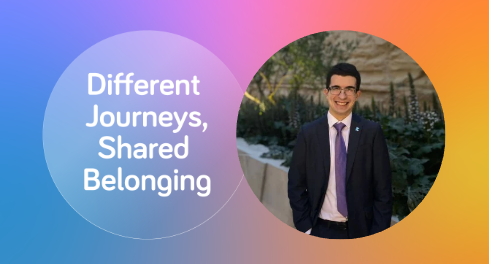
‘When looking back to my experience studying at the University of Malta, I remember how little time it took me to settle in and get absorbed into the environment of student life at university. I made friends, I gained knowledge, and I always found the support that I needed. Joining student organisations helped me to grow as a person and focus on my passions, but the support I found throughout my academic journey helped me to learn even more and expand upon my areas of interest.
I found all of this to certainly be a rewarding experience, and most definitely, a life-changing one.' - Jacob Callus
True inclusion is a shared responsibility.
The ADSC study highlights a growing call for the active involvement of students with disabilities in shaping the systems that support them, often captured in the phrase: ‘Nothing about us without us.’ While individual Access Arrangements remain essential, the long-term goal is the development of an equity culture in which diverse needs are anticipated and respected from the outset.
Latest articles
_300x300_.png)


