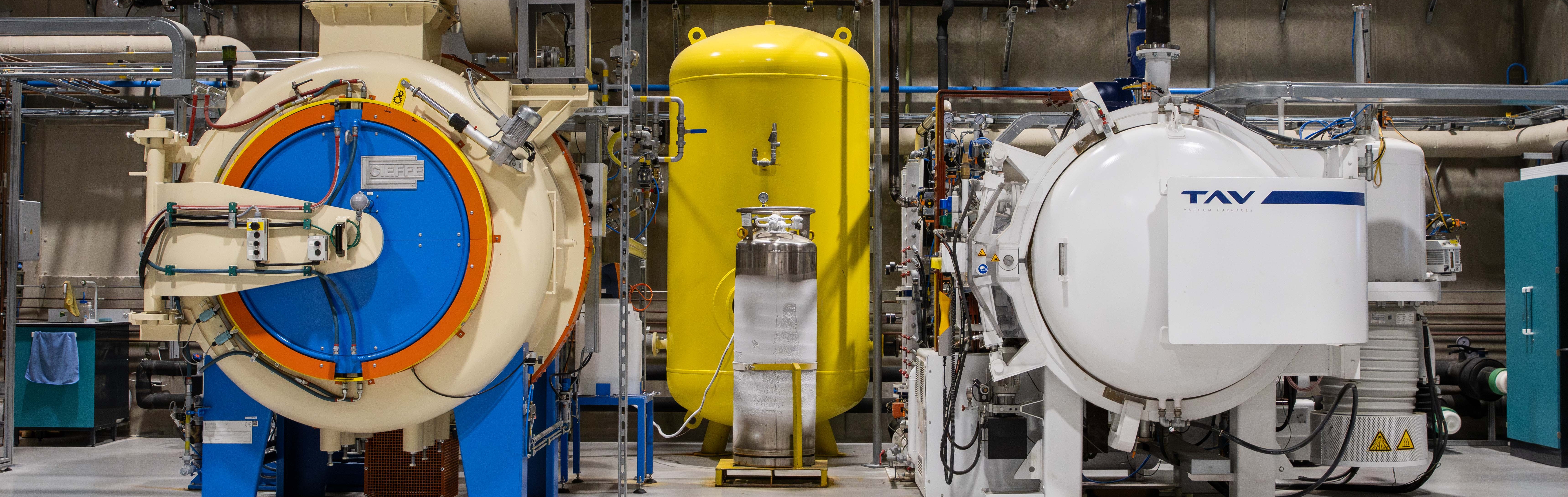
This Industrial Furnace (TAV Vacuum Furnace – Model TPH 45/40/60) is used both for research applications as well as industrial work. Tool steels such as 1.2083, 1.2379, 1.2343, etc… that are hardened by gas quenching are heated to their particular austenitizing temperature which very often exceeds 1200°C, in a vacuum chamber, thus reducing surface oxidation. Once the austenitizing temperature is reached, nitrogen gas is introduced in the chamber. Quenching takes place at a pressure of 5 bar in a nitrogen atmosphere. Following quenching, parts are tempered in the same vacuum chamber at a pressure of 10 to 6 mbar according to the desired hardness.

Nitriding is a ‘case hardening’ process whereby nitrogen is introduced into the surface of a ferrous alloy by retaining the component to be treated at a suitable temperature in contact with a nitrogenous atmosphere. The Nitriding Furnace (Model: Cieffe NDN 1/E-R, electrically heated for gas nitriding and Low-pressure nitriding, nitrocarburizing, tempering and annealing, horizontal chamber type) operates at comparatively low temperatures employed in the process (520 - 540°C) and the absence of a quenching operation account for the lower distortion and deformation normally experienced in either carburising or conventional bulk hardening treatments. This surface treatment is very often applied on plastic injection mould plates to reduce wear and hence prolong the mould lifetime.
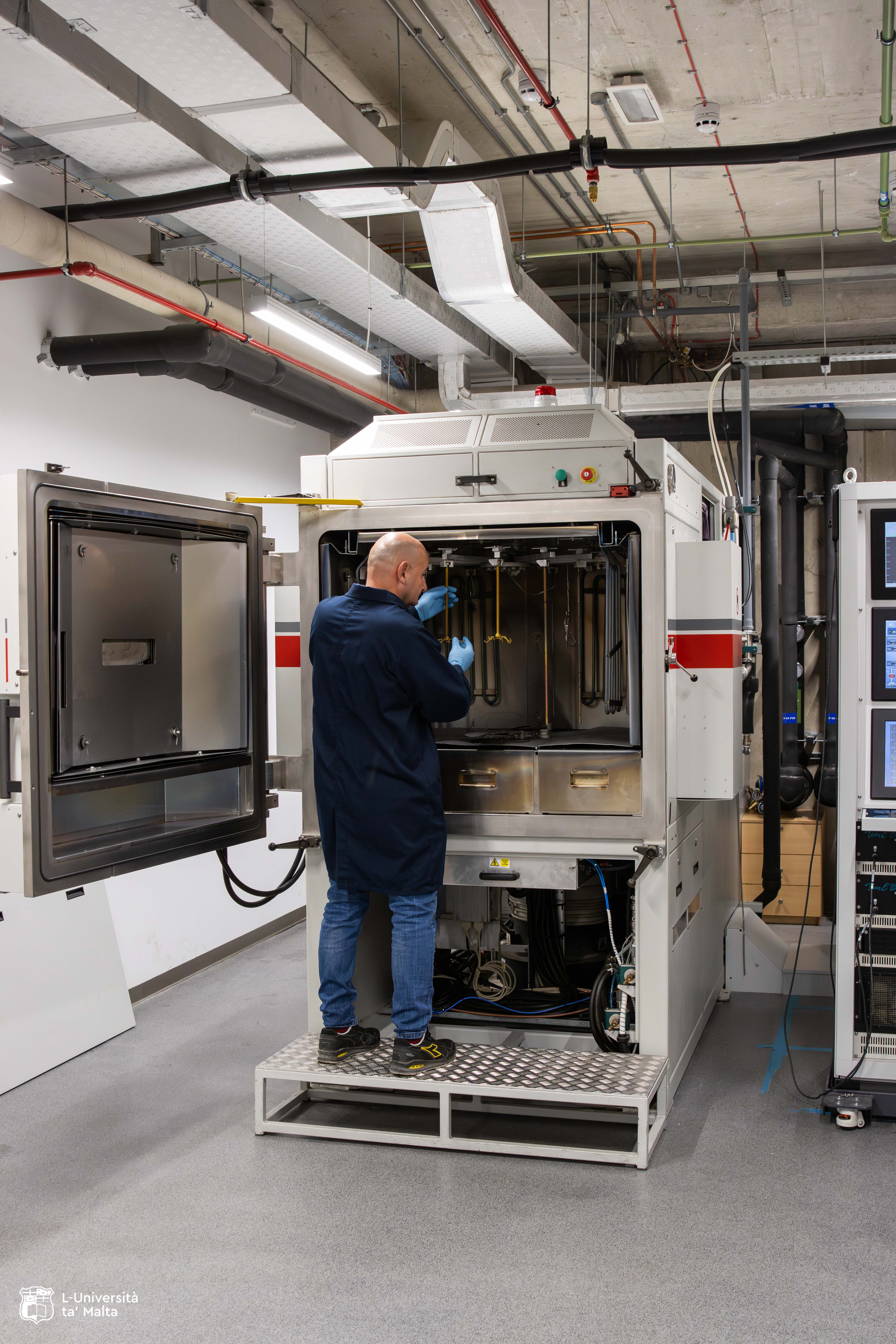
The TECVAC-Wallwork IP85M PVD Coating Rig is a Titanium Nitride (TiN) Coating Machine for regular production operation, capable of treating workpieces up to 250 kg. It is designed to apply an ultra-hard coating of titanium nitride (TiN) to the surface of metals, in particular high-speed steel, thus improving the cutting performance of tools and their wear resistance. It generally reduces friction, wear, and corrosion. The coating is applied at relatively low temperatures, less than 500°C. The process used by the IP70LC is a reactive physical vapour deposition (PVD) in which ionised titanium vapour reacts with ionised nitrogen gas to yield a compound with the correct composition.
Casting is a manufacturing process in which a liquid material is usually poured into a mould, which contains a hollow cavity of the desired shape, and then allowed to solidify. The solidified part is also known as a casting, which is ejected or broken out of the mould to complete the process. Casting is most often used for making complex shapes that may vary in size and that would be otherwise difficult or uneconomical to make by other methods.
The furnace found in the DMME foundry (Model: Indutherm, Type TF 4000) can be used for casting aluminium and steel since the melting temperature can go up to 1500°C. It is mainly used for research purposes with Engineering students.
The Salt Bath (Model: Nabertherm TS 40/30) is an electrically heated furnace used for the heat treatment of metals up to 750°C. The salt-bath furnaces TS 40/30 can be used for heat treatment of metals in neutral and active salt baths. They are used for processes such as nitriding. The temperature used is typical of all nitrocarburizing processes: 550 to 570°C. The advantage of salt nitriding is that it achieves higher diffusion in the same period of time compared to any other method.
Three muffle furnaces are used for the heat treatments of materials. Typical heat treatments include annealing, normalising, oil hardening, and tempering treatments.
All three furnaces can reach a temperature of 1200°C. The three furnaces available at DMME laboratories are:
Tube furnaces are used for very specialised heat treatments whereby the material is heat treated in a special environment like inert gas, vacuum, or reactive gas. These furnaces are used mainly for research purposes due to the size of their chamber.
The Nabertherm tube furnace (Model: R/120/500/13) can reach a temperature of 1200°C. The Nabertherm tube furnace (Model: RHTC 80-450/15) can reach a temperature of 1500°C. Both tube furnaces can be used under vacuum, inert gas like argon and nitrogen, and reactive gas like oxygen.
The Fritsch Pulverisette 6 Mechanical Ball Mill is used for research purposes. It is a small laboratory mill whereby a number of hardened steel balls are placed in a grinding bowl together with the medium that needs to be crushed, mixed or homogenised. The grinding/mixing process can be performed dry or wet. The crushing process of the material to be ground takes place through the impact and friction between the grinding balls and the inside wall of the grinding bowl.

The Shot Peening Machine (Model: Rösler AFT 800 R P) is equipped with an ABB 6-axis robot of type IRB 1600. It is used for the precise and automated shot peening of complex components, enhancing fatigue life and surface performance. The integrated robotic system enables consistent coverage and high repeatability, making it suitable for demanding applications where component durability and reliability are critical.
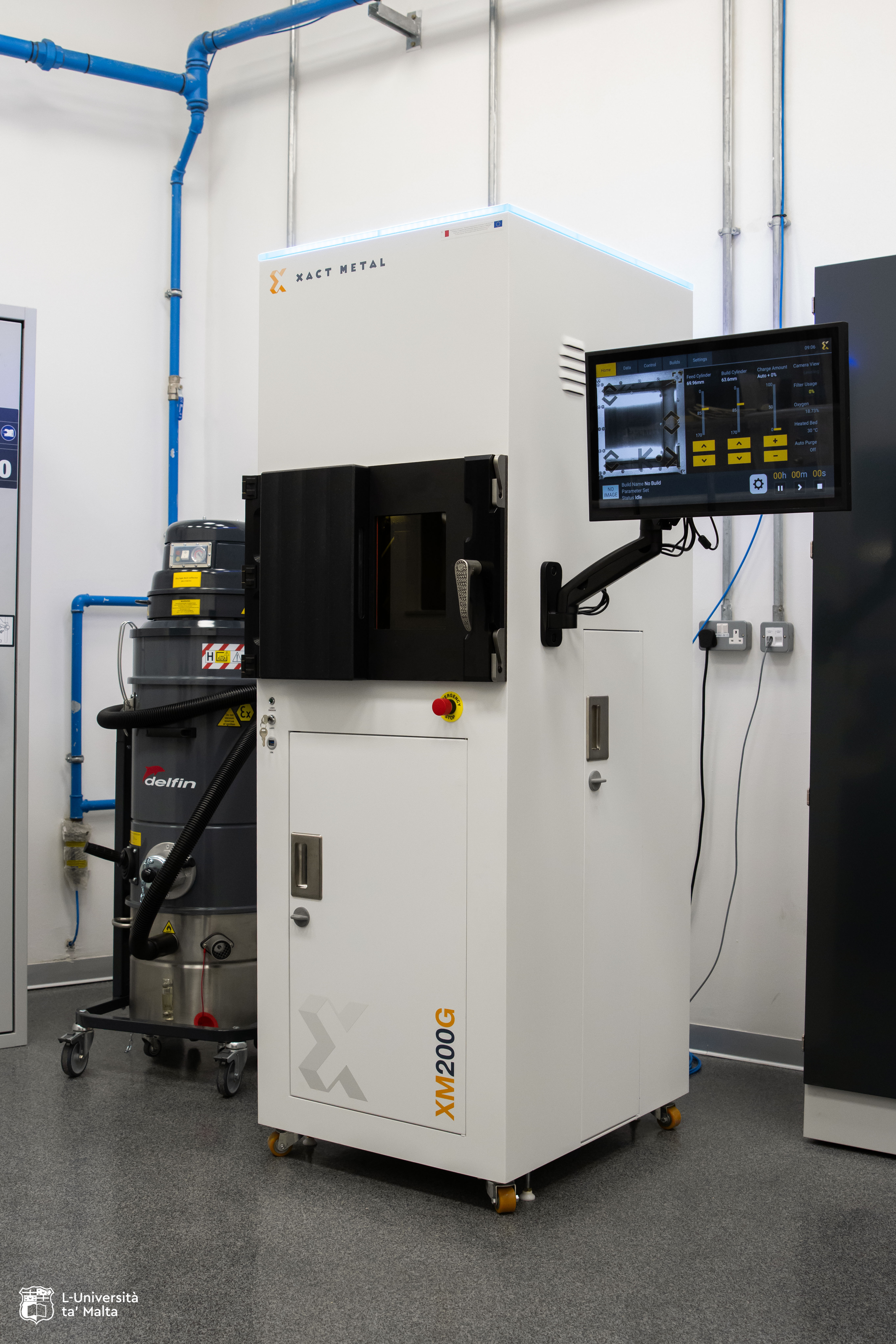
The 3D Printing Machine (Model: Xact Metal XM200G) is a high-precision metal additive manufacturing system based on laser powder bed fusion technology. It is used for producing complex geometries in stainless steels and other alloys with excellent accuracy and surface quality. The process enables the fabrication of intricate components that would be difficult or impossible to manufacture using conventional methods, making it suitable for rapid prototyping as well as small- to medium-scale production.