
Abstract: “Adam: The Firstness of Film and the Skin of the World”
Walid El Khachab
The name Adam evokes firstness because of his status as the first human in some major narratives which still shape global cultures. However, Biblical and Koranic traditions imply that other living creatures inhabited the world before him. In Arabic, Adam is related to soil, but also to the surface - or the skin of - the Earth (Adim in Arabic). Adam as a conceptual character in the Deleuzian sense, seems to have a double agency: 1) in Arabic he is the locus of a firstness that is not an absolute one, yet constantly performed by him, i.e. he always is a sort of “first human,”simply by being; 2) and in English and Arabic respectively, “Film” and “Adam” coincidentally mean, or refer to, “epidermis,” which constantly reminds the viewer’s eye of the haptic nature of cinema. This contribution to film theory attempts to rehabilitate the centrality of the Human, without viewing it as a hierarchical firstness. It accounts for the tactility of the visual media, and acknowledges film as skin, both as a veil, or epidermis (of the body) and as a sort of plane of immanence and a surface tattooed by affects. Methodologically, thinking and writing between Arabic and English is a way to produce a theory of film in a “minor language,” i.e. in a language that undermines the production of theory in major European languages, in the sense that Deleuze conceives of Kafka's German as the production of a “littérature mineure.” The skinness of film and the firstness of the Human seem to acquire a different connotation when thought of in English “and” Arabic, through the prism of film “and” Adam.
Biography:
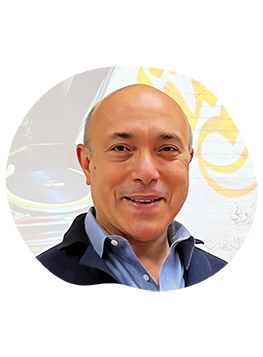
Walid El Khachab has taught cinema at the University of Montreal and University of Ottawa. He is currently Associate Professor and Coordinator of Arabic Studies at York University (Toronto). After writing a Ph.D. dissertation on melodrama in Egypt, he focused his research on the sacred in cinema and Middle Eastern cinemas. He has published on cinema and pop culture in Arabic, French and English, and on Sufism and comedy in Durham NC, Montreal, Cairo, Paris, and Istanbul. His work appeared in CinémAction, Sociétés & Représentations, CinéMas and Intermédialités, among others. His most recent book is: Laughing out Loud on the Nile Banks: Adapting Comedy in Cinema. (in Arabic). (Cairo: Dar Al Maraya Publishing House, 2024)
قهقهة فوق النيل: اقتباس الكوميديا في السينما
Abstract: “Stories of Animistic Cinema “
May Adadol Ingawani
My talk draws on my experience of developing an experimental curatorial research project with wide-ranging collaborators. Animistic Apparatus (2018 - ) devises a curatorial method to explore ecologies of relations intertwining cinematic and cosmological practices with multiple agential beings in worlds of asymmetric powers and potency. The project’s unfolding partly entailed re-situating film theory’s foundational question: what is cinema? It relearns moving image curation by drawing inspiration from an animistic cinematic and cosmological genealogy of film culture in Thailand: the practice of outdoor film projection as ritualistic efforts in spirit ecologies of people in precarious circumstances to make time, future prospect, and relations with opaque powers.
From my initial film historical research into itinerant film projection around Thailand since the Cold War period, I learnt to think with the practice of making animistic film offerings. This is a ritualistic mode of film projection through which existentially vulnerable people address and maintain relations with opaque and potent spirits of place. This experience of research led me to initiate a series of curatorial experimentations to find creative, relational and embodied ways to theorise the poetic tendency of Southeast Asian contemporary artists’ cinema from the place and the ecology of animistic film projection. Reflecting on the insights gained from this experimentation, my talk ends by proposing a definition of Southeast Asian contemporary artists’ cinema as animistic poetics. Drawing on the practices of artist-researchers such as Lucy Davis, Riar Rizaldi and Ho Tzu Nyen, I highlight elements of this poetic cinematic form concerning durational and relational rhythms, agency of existentially vulnerable humans, and addressing as gestational practice of the powerless.
Biography:
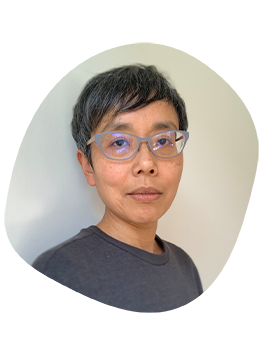
May Adadol Ingawanij | เม อาดาดล อิงคะวณิช is a writer, curator, Professor of Cinematic Arts, and Co-director of the Centre for Research and Education in Arts and Media, University of Westminster. She works on Southeast Asian contemporary art; artists’ cinema; de-westernised and decentred histories and genealogies of cinematic arts; avant-garde legacies in Southeast Asia; forms of future-making in contemporary Global South artistic and curatorial practices. May writes in Thai, English, and in translation, for a wide range of academic and arts publications. Her criticisms and essays are published in New Left Review, Screen, Southeast of Now, Afterall, MoMA C-MAP, and exhibition publications on artists Anocha Suwichakornpong, Apichatpong Weerasethakul, Araya Rasdjarmrearnsook, Chris Zhongtian Yuan, Ho Tzu Nyen, Korakrit Arunanondchai, Lav Diaz, Nguyen Trinh Thi, among others. Her recent curatorial projects include the 69th Flaherty Film Seminar – To Commune (Thai Film Archive), Legacies (with CIRCUIT Aotearoa New Zealand), and Animistic Apparatus (multiple collaborators and locations).

Abstract: “Moral Education by Film and Television”
Sandra Laugier
Reflecting on popular culture and its 'ordinary' objects, such as popular films and TV series, leads to a transformation of theory and criticism that refuses to make art a sphere of activity separate from ordinary life. What Stanley Cavell claimed for Hollywood popular films - their capacity to create an ordinary culture shared by millions and to provide a moral education for viewers - has been transferred to television series, which have taken on the task of educating the public and exploring unknown forms of life. Cavell was the first to consider the mutation of theory and criticism wrought by popular culture, and the self-transformation demanded by our encounters with new experiences. The value of a culture lies not in its "great art" but in the education and cultivation of the self, the discovery of what matters to them.
Biography:
Sandra Laugier is Professor of Philosophy at Université Paris 1 Panthéon Sorbonne, Paris, France, Deputy Director of the Institut des sciences juridique et philosophique de la Sorbonne (UMR 8103, CNRS Paris 1). She was trained at the Ecole Normale supérieure, Paris and Harvard University. She has widely published on ordinary language philosophy (Wittgenstein, Austin, Cavell); moral philosophy and the ethics of care; democracy and gender studies; popular art and culture. She is the translator of Stanley Cavell’s work in French and is an advisor for the publication of Cavell’s Nachlass.
She has been Visiting Professor at the School of Criticism and Theory (Cornell University,2023), the University of Toronto (2022), La Sapienza Roma (2019), Boston University (2019, 2021), Pontifical University Lima (2017); Visiting Researcher at the Max Planck Institute Berlin (2014, 2015); Distinguished Visiting Professor at The Johns Hopkins University (2011); Facultés Saint-Louis, Bruxelles (2009); The Johns Hopkins University (2008, 2009). Awards include: Senior Fellow of Institut Universitaire de France (2012-23), Chevalier de la Légion d’Honneur, (2014), Grand prix de philosophie, Académie française (2022), President of the SSHAP (2024), Member of the American Philosophical Society (2024). Among her recent publications: Why We Need Ordinary Language Philosophy (The University of Chicago Press, 2013), Nos vies en séries, Ethique et philosophie d’une culture populaire (Flammarion Climats, 2019), Politics of the Ordinary, Care, Ethics, Forms of Life (Peeters, Leuven, 2020), La société des vulnérables (with Najat Vallaud Belkacem), (Gallimard, 2020); Wittgenstein, Politique de l’ordinaire, (Vrin, 2021); TV-Philosophy: How TV series change our thinking, TV-Philosophy. The Ethics and politics of TV (University of Exeter Press, 2023); Wittgenstein, The Senses of Use (The University of Chicago Press, 2025). She is the Principal Investigator of the ERC Advanced Grant project DEMOSERIES and the head of the French National research project EUPRAXIE on cultural industry.
