
Speakers

Panagiotis Alexiou
Panagiotis is the ERA Chair in Bioinformatics for Genomics in Malta, and the main organizer of the MALTAomics Summer School. He studied Genetics and Bioinformatics, and has experience in Next Generation Sequencing data analysis, and the use of Machine Learning for genomic and transcriptomic annotation. His current interest lies in the intersection of Machine Learning and Multi-omics data

Aleena Mushtaq
Browsing genes and genomes with Ensembl
Aleena completed her MSc in Molecular and Biomedical Sciences at King’s College London. She joined the Quadram Institute Biosciences, UK to pursue her PhD in the field of Molecular Biology. Her PhD investigated the molecular and microbial changes in the gut liver axis in response to the Western diets. She joined EMBL-EBI as an Ensembl Outreach Officer in 2021 and delivers training on Ensembl resources.

David Cechak
Introduction to Deep Learning for Genomics
Computational Biologists have been using Machine Learning techniques based on Artificial Neural Networks for decades. New developments in the Machine Learning field over the past years have revolutionized the efficiency of Neural Networks and brought us to the era of Deep Learning. In the news, you can read about Deep Learning beating experts in Go, Chess and StarCraft, translating texts and speech between languages, turning the steering wheels of self-driving cars and even producing images and text at near human level. In our field, we have witnessed such systems reaching competitive accuracy with experimental protein folding, experienced radiologists, and calling single nucleotide polymorphisms in genomic data better than any other method. This workshop will introduce the major concepts of Deep Learning and showcase their application in the field of Genomics.
David Cechak is a PhD candidate at the Central European Institute of Technology where together with Vlastimil Martinek, he is developing Deep Learning methods for the analysis of biological data.

Vlastimil Martinek
Introduction to Deep Learning for Genomics
Computational Biologists have been using Machine Learning techniques based on Artificial Neural Networks for decades. New developments in the Machine Learning field over the past years have revolutionized the efficiency of Neural Networks and brought us to the era of Deep Learning. In the news, you can read about Deep Learning beating experts in Go, Chess and StarCraft, translating texts and speech between languages, turning the steering wheels of self-driving cars and even producing images and text at near human level. In our field, we have witnessed such systems reaching competitive accuracy with experimental protein folding, experienced radiologists, and calling single nucleotide polymorphisms in genomic data better than any other method. This workshop will introduce the major concepts of Deep Learning and showcase their application in the field of Genomics.
Vlastimil Martinek is a PhD candidate at the Central European Institute of Technology where together with David Cechak, they are developing Deep Learning methods for the analysis of biological data.

Emmanouil Maragkakis
Gene regulation discovery in the era of third generation sequencing
Dr. Maragkakis' research focuses on understanding the high-dimensional regulation in cells as a key component of discovering the mechanistic basis of the physiology and diseases of aging. His lab develops experimental and computational approaches that integrate high-throughput short- and long-read sequencing to decipher the defining features of single-cell and spatial dynamics of RNA. The group employs machine learning to discover post-transcriptional RNA modifications, to model RNA regulation and to explore associated changes across cells, tissues and aging.

Donatella Cea
Introduction to Explainable AI
The relevance of Explainable Artificial Intelligence (XAI) is increasing as it plays a crucial role in understanding machine learning models and gaining acceptance for the decisions they make. In this workshop, the importance of XAI will be discussed from social, scientific, and ethical perspectives. Following the introduction and presentation of existing XAI methods, participants will engage in a hands-on session focusing on applying model-agnostic and model-specific techniques to tabular datasets. Specifically, participants will have the opportunity to delve into permutation feature importance, SHAP (SHapley Additive exPlanations), and Forest Guided Clustering. The practical aspect of the workshop will involve using Python to implement these methods and then interpreting the resulting plots and outcomes. Prior knowledge in machine learning basics is assumed to facilitate a comprehensive understanding of the workshop's content.
Donatella Cea is an AI consultant at Helmholtz AI central unit for Health. Together with Lisa Sousa she is part of a team of health-focused consultants. They are key actors in achieving the Helmholtz AI goal of empowering scientists to use AI in their research. For that, they advise and support research teams in using machine learning and deep learning.
Lisa Sousa
Introduction to Explainable AI
The relevance of Explainable Artificial Intelligence (XAI) is increasing as it plays a crucial role in understanding machine learning models and gaining acceptance for the decisions they make. In this workshop, the importance of XAI will be discussed from social, scientific, and ethical perspectives. Following the introduction and presentation of existing XAI methods, participants will engage in a hands-on session focusing on applying model-agnostic and model-specific techniques to tabular datasets. Specifically, participants will have the opportunity to delve into permutation feature importance, SHAP (SHapley Additive exPlanations), and Forest Guided Clustering. The practical aspect of the workshop will involve using Python to implement these methods and then interpreting the resulting plots and outcomes. Prior knowledge in machine learning basics is assumed to facilitate a comprehensive understanding of the workshop's content.
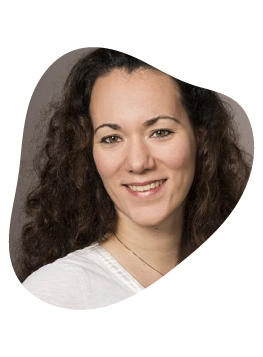
Lisa Sousa is an AI consultant at Helmholtz AI central unit for Health. Together with Donatella Cea, she is part of a team of health-focused consultants. They are key actors in achieving the Helmholtz AI goal of empowering scientists to use AI in their research. For that, they advise and support research teams in using machine learning and deep learning.

Katarina Gresova
Explainability for Deep Neural Networks
Katarína Grešová is a dedicated Machine Learning Engineer and Genomics and Deep Learning PhD student at Masaryk University in the Czech Republic. With a strong background in Information Technology and Bioinformatics from the Brno University of Technology, she has distinguished herself in the realm of computational biology, particularly in modeling small RNA binding rules using machine learning. Currently, Katarína splits her time between her PhD research and working as a Machine Learning Engineer at Melown Technologies, where she applies her knowledge to real-world problems such as teaching systems to differentiate between houses and trees in geospatial data. Her technical ability spans a wide range of programming languages and technologies, and her interests lie in machine learning, deep learning, natural language processing, and data analysis in the context of bioinformatics and molecular genetics.

Jean Paul Ebejer
Machine Learning for Protein Function
Dr Jean-Paul Ebejer read an undergraduate bachelor’s degree in I.T. at the University of Malta, graduating with honours in 2000. Immediately afterwards he moved to Germany, where he worked for IBM as an IT specialist on Foreign Exchange and Money Market systems for Credit Suisse and Deutsche Bank. In 2004 he started working for Ixaris Systems, on their flagship product Entropay, where he eventually became a technical architect. Following an MGSS scholarship and his strong interest in biological systems, big data, data science, and "anything for which an explanation is in short supply" he successfully completed, with distinction, an M.Sc.in Bioinformatics and Theoretical Systems Biology at Imperial College, London (2008-2009). He was then awarded a Marie Curie Fellowship to undertake a doctoral degree in structural bioinformatics and computational drug discovery at the Statistics Department, University of Oxford. During his D.Phil. and post-doc positions he has worked on a large number of Bioinformatics and Data Science problems, both in industry and academia. He is a keen Java enthusiast and has been an invited speaker at the local Java Users Group. He finds it hard to admit that he prefers Python nowadays. He has been an R and Python power user since 2007. His main interest is building machine learning and bioinformatics models for drug discovery.
Dr Ebejer has published several papers in peer-reviewed scientific journals and for many years was part of the problem setting committee of the yearly ICTSA Programming Competition. He now lectures several Bioinformatics, Statistics, Big Data, Machine Learning, and Cloud Computing undergraduate and postgraduate courses at the University of Malta. He is a founding member of the Data Science Research Platform at the University of Malta.

Denisa Sramkova
Deep Learning for Protein Structure
Denisa Sramkova has a Master's degree from the Faculty of Informatics at Masaryk University in Brno, Czech Republic, with a specialization in artificial intelligence. Originally she majored in databases and focused solely on computer science problems. Her first bigger project was dealing with unsupervised methods of anomaly detection in the network traffic data. Currently she is studying for a PhD in the field of bioinformatics, where she hopes to gain meaningful insights into the protein knotting phenomenon using deep learning.

Ester Jarour
Effective Dissemination and Communication of Research Results
Ester Jarour is the communications lead at CEITEC Masaryk University. She has a proven track record of improving the overall visibility of CEITEC research results, as well as in engaging researchers in science communication activities. She developed by students well-rated science communication course that teaches students how to deliver engaging scientific presentations to various audiences. In 2022, Ester was one of three selected communication professionals in Europe to pilot a new type of ERC grant aimed at science journalism. Ester studied International Management at the Zurich University of Applied Science in Switzerland. She enjoys helping others to achieve their professional goals.
