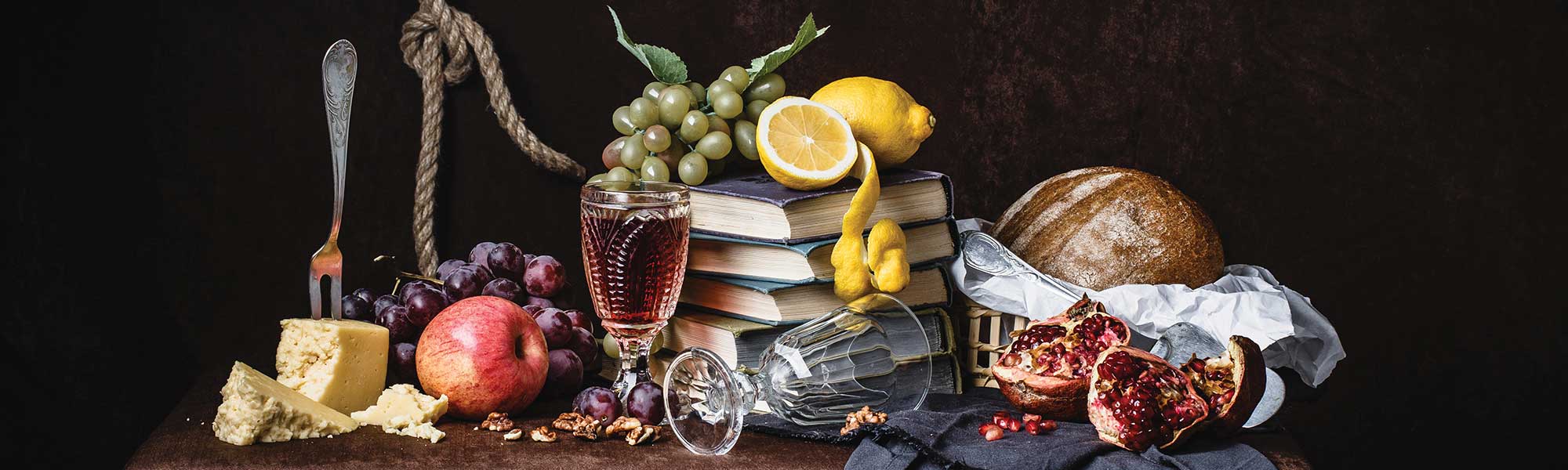
Students and graduates are welcome to apply for a Masters (by research) in Mediterranean Studies where a stream dedicated specifically to Mediterranean Foodways has been established. The Platform also welcomes doctoral research proposals, as well as opportunities for collaboration and discussion, on all matters relating to Foodways on a local and international level.
Cooordinator – Prof. Carmel Cassar
This unit will explore traditional eating habits within a Mediterranean framework. Despite the differences in food choices and cooking practices specific to each area and culture, the societies that live along the shores of the Great Sea share a common set of basic features. Traditionally the Mediterranean was often an area where poverty and food shortages were historically endemic. Nonetheless, the Mediterranean region managed to generate a unique dietary pattern, resulting from a complex and multi-millennial interaction between the natural food resources available in its environment and strengthened by the people that inhabit its shores. Over time, the particular features that came to be associated with a Mediterranean diet came to form the basis of everyday eating habits in the region. The course will evaluate the way cooking methods transformed traditional food habits and changing eating patterns over time. It will also look at the role played by nutritional and dietary values, and the ever-growing problem of food waste in modern fast changing Mediterranean societies.
This is one of the units being offered by the Centre for Liberal Arts & Sciences (CLAS).
Programme in the Liberal Arts and Sciences (PLAS)
Study at your own pace
Individual Units | Certificate | Diploma | Higher Diploma | Degree
PLAS is an excellent opportunity for personal and professional development. You may apply for any and as many Units as you wish from the broad range of PLAS Units on offer.
For any queries contact: +356 2340 3772/3 or visit the CLAS website.
PLAS Units consist of weekly evening lectures between 18:00 and 20:00, normally spread over 14 weeks. Each unit comprises 4 ECTS which involves between 20 to 28 contact hours.