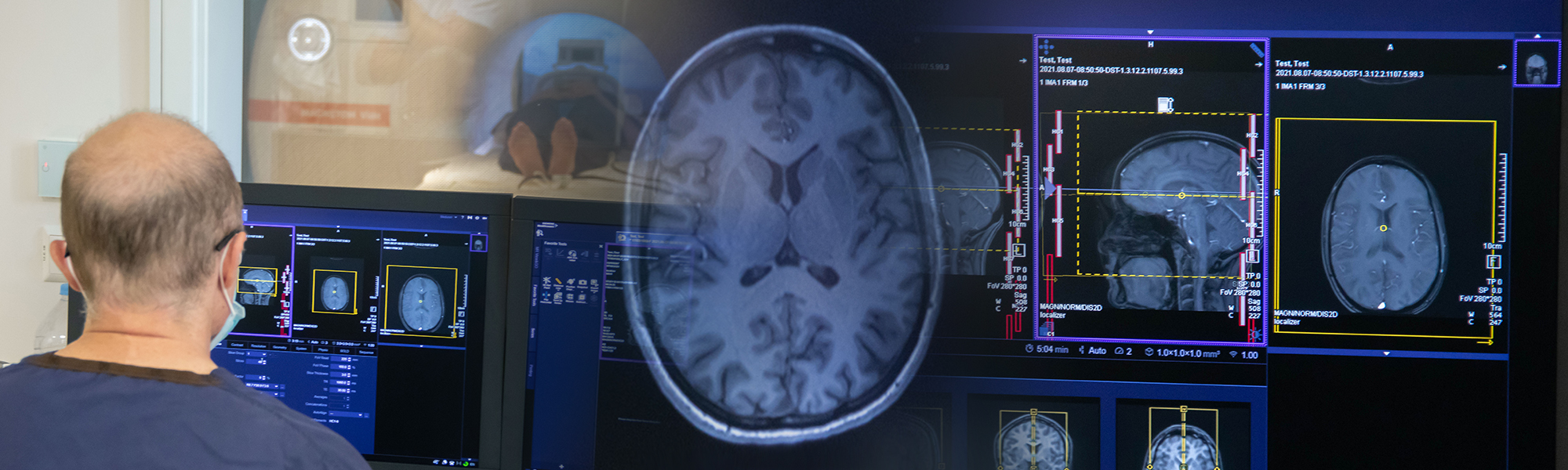
Every MRI scan entrusted to UMRI is a valuable contribution to science. Whether you have volunteered to take part in a study or are a patient who has agreed to share your MRI data, your involvement helps researchers better understand health and disease and opens the door to advances that benefit society.
At UMRI, protecting your privacy is one of our highest priorities. When you take part in MRI research, your scans are processed in a way that removes any information that could directly identify you. This process, known as pseudo-anonymisation, ensures that they cannot be traced back to you by researchers or the public.
Under GDPR law, you remain the owner of your MRI data. This means you can request access to your data, ask for corrections, or withdraw from participation.
Patients who agree to share their MRI data for research and education must have read and signed this document before the data is sent to the University repository.
To protect your identity, all MRI scans collected through UMRI go through a process called pseudo-anonymisation. This means that any personal information (such as hospital or ID numbers) is transformed before your data is stored, so researchers cannot trace the images back to you.
This protection is achieved through two key steps:
By combining hashing and encryption, UMRI ensures that no single person or system has enough information to identify you. Even if someone gained access to the stored data, it would remain unreadable and untraceable.
Detailed information about our Hashing and Encryption procedures is found in this document:
Hashing and Encryption information
Under the General Data Protection Regulation (GDPR – EU Regulation 2016/679) and the Malta Data Protection Act (Cap. 586 of the Laws of Malta – 2018), you have specific rights regarding your personal data held by UMRI. These rights allow you to control how your MRI data and related personal information are used.
You can request the following:
You may also object to the processing of your personal data on grounds relating to your specific situation. This means you can ask us to stop using your information in certain ways if you have concerns.
Requests should be submitted to UMRI using the GDPR form (click the button below) if they relate to data stored in the University’s repository.
Important: In some cases, UMRI may not be able to fully satisfy your request if it would seriously hinder ongoing research. For example, if your data has already been processed for a study, it may still be used for that study even if you request deletion. We will always explain the reason clearly if this occurs.