The following study units are offered by the Department of Artificial Intelligence as part of the Bachelor of Science in Information Technology (Honours) (Artificial Intelligence) and the Master of Science in Artificial Intelligence.
Computer Vision is one of the key research areas of artificial intelligence. It is a multidisciplinary field that handles the key steps required to enable machines to reason about image and video data. This area is organised into three main stages, namely image acquisition, image processing and understanding. This study-unit serves as an introduction to this field by exposing the students to a high level understanding of every stage. Obtain more information.
This study-unit covers the fundamentals of how to search for images based on their content, similar to Google Image search. This unit covers various filtering and keypoint detection methods together with the bag of visual words approach. Novel approaches that make use of deep-learning will also be introduced in this study-unit. The study-unit will be useful for students interested in image analytics and artificial vision related to a selection of areas. Obtain more information.
Since 2012, deep learning has been revolutionising the fields of computer vision and artificial intelligence. Deep feedforward networks, supported with vast datasets and computing power can now surpass human capabilities in performing object detection and even facial recognition. Deep learning has proved useful in a variety of disciplines and this study-unit focuses on the state of the art developments in computer vision. The core of this unit focuses on variations of convolutional and recurrent neural networks as applied to vision problems. Obtain more information.
The following study units are offered by the Medical Physics Unit as part of the Bachelor of Science (Honours) in Physics, Medical Physics and Radiation Protection and Master of Science in Medical Physics.
This study unit is offered as part of the Bachelor of Science (Honours) in Physics, Medical Physics and Radiation Protection course. This study-unit applies what was learned in the previous core units to the specialty of Diagnostic and Interventional Radiology and Dentistry at a MINOR level. It will lay the groundwork for students to be able to specialise in this area at Masters level. The unit includes both ionising (projection radiography, fluoroscopy, CT) and non-ionising (ultrasound and MRI) imaging modalities including interventional radiology systems. Owing to the proliferation of imaging devices for dental surgery the unit provides also an overview of these including cone-beam equipment. The unit follows the recommendations regarding core and specialist Diagnostic and Interventional Radiology and Dentistry expertise to be found in the EC documents 'European Guidelines on the Medical Physics Expert' and 'Requirements and methodology for recognition of Radiation Protection Experts'. Obtain more information.
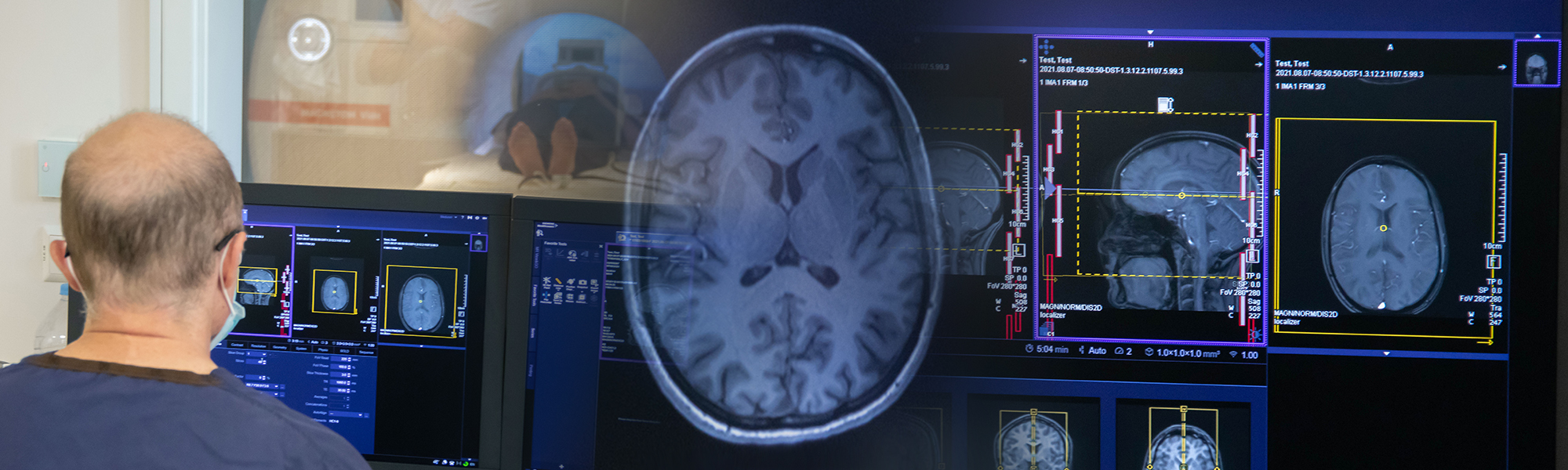
This study unit is offered as part of the Master of Science in Medical Physics course. This study-unit focuses on preparing candidates to fulfill their role as CLINICAL MEDICAL PHYSICISTS in the effective, safe, efficient and optimised use of NON-IONISING radiation based imaging modalities, as potential MAGNETIC RESONANCE SAFETY EXPERTS and as MAGNETIC RESONANCE SAFETY OFFICERS in Diagnostic and Interventional Radiology and Dentistry. The study unit includes all common NON-IONISING imaging modalities including MRI, DIFFUSION WEIGHTED MRI, fMRI, MR SPECTROSCOPY, MR ANGIOGRAPHY, MR TRACTOGRAPHY, B-MODE ULTRASOUND, COLOUR DOPPLER, SPECTRAL DOPPLER, POWER DOPPLER, ELASTOGRAPHY and their use throughout the healthcare system. Obtain more information..
If you are interested in doing a Masters by Research or PhD with UMRI, kindly get in touch with one of the board members.