In the following section, you may find all news about past and upcoming events related to the work being done by the Quantum Communications Research Group at UM.
Friday, 16th January 2026

The Faculty of ICT welcomed secondary school students for an outreach event aimed at showcasing the work carried out at the Faculty and highlighting the wide range of career opportunities available in ICT. As part of this initiative, the Quantum Communications Research Group took part by introducing students to the exciting and rapidly evolving field of quantum communications.
Around 26 students from Our Lady Immaculate School and San Andrea Senior School took part in the event, where they were introduced to the fundamentals of cryptography, the importance of secure communications, and the role of quantum technologies in enhancing security.
The students were introduced to key concepts such as Quantum Key Distribution (QKD) and learned about ongoing research efforts both locally and internationally. These included Malta-based initiatives such as the PRISM project, which focuses on the development of a national QKD network, and the SQUIRE project, which aims to enhance the efficiency of error correction codes on embedded devices.

To encourage active participation, the workshop featured a hands-on activity in which students attempted to decode a message encrypted using the Caesar cipher. This practical exercise offered an accessible introduction to cryptography while illustrating the limitations of simple encryption methods and the growing need for more robust security solutions in today’s digital landscape.
We look forward to engaging with more students at future events and continuing to inspire the next generation of ICT professionals.
Friday, 12 December 2025
The Quantum Communications Research Group is pleased to announce that it has received funding for two new projects, QUARTHIC and GRYFFIN-Q. More information as follows:


Stay tuned for more news on these new projects in the coming weeks and months!
Friday, 28 November 2025

Recent research by the Quantum Communications Research Group was presented at the International Symposium on Computing and Networking (CANDAR 2025), held in Yamagata, Japan.
Mark Mizzi discussed the paper 'GPU implementation of binary and non-binary LDPC decoding,' which introduces a CUDA-accelerated LDPC decoder supporting both binary and non-binary alphabets. The implementation is evaluated against several existing CPU and GPU approaches, demonstrating its performance across different field sizes and codeword lengths.
The full abstract of the paper is reproduced below:
Since their rediscovery in the 1990s, Low-Density Parity-Check (LDPC) codes have dominated the field of capacity-approaching error correcting codes, and are currently used in a number of practical applications. The recent use of these codes in quantum key distribution (QKD) systems often requires much larger codeword sizes than previously considered, and has renewed interest in LDPC codes with non-binary alphabets. Both aspects introduce a significant increase in computational complexity, so that real-time implementation in practical QKD systems remains a challenge. In this work we propose a CUDA-accelerated LDPC decoder for binary and non-binary alphabets, evaluating its performance in comparison to a reference CPU implementation and to earlier GPU and CPU implementations, for a range of field sizes and codeword lengths.
This work, performed as part of the SQUIRE and QSNP projects and contributes to ongoing efforts toward efficient, high-performance error correction techniques for quantum communication systems.
The paper is available via IEEEXplore or the IEEE Computer Society Digital Library.
Thursday, 13 November 2025
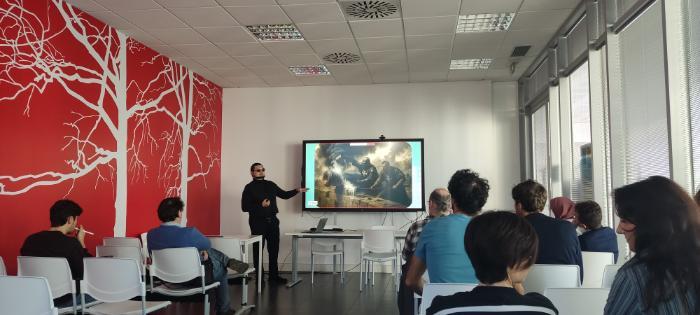
The talk “Advancing Quantum Cryptography at the University of Malta” was recently delivered by Dr Roberto Salazar, a member of the Quantum Communications Research Group, at the CNR-INO laboratory in Trieste. The presentation highlighted the group’s ongoing research activities and aimed to strengthen collaborations with other international teams.
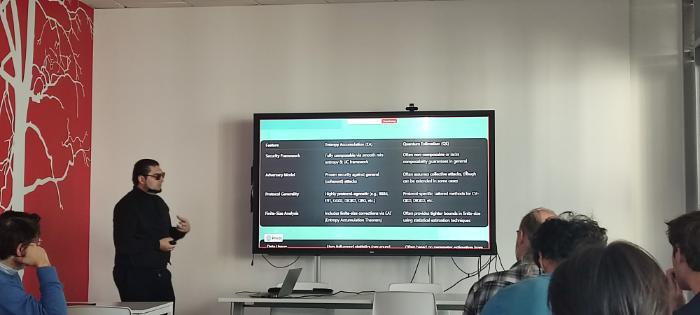
Dr Salazar focused on innovative security proof techniques and the optimization of quantum-classical channel capacity, offering valuable insights into the group’s contributions to the advancement of quantum cryptography.
Stay tuned for other talks to be held by the Quantum Communications Research Group!
Thursday, 30 October 2025
Radio Mocha, a program about science aired on the 'Radju Malta' radio station, recently interviewed Dr Roberto Salazar and Dr Ing. Christian Galea.

The discussion, led by Danielle Martine Farrugia, centred around quantum computers, the implications on secure communications, and the work currently being done by the group in this area. An overview of the projects, namely QUDICE, QSNP, PRISM, SQUIRE, ANQuOR, and two exciting new projects, was provided.
The full interview can be found on Radio Mocha's Facebook page.
We thank Danielle for the invitation, and look forward to the next one!
Wednesday, 29 October 2025

As part of its ongoing research in quantum communications, the Quantum Communications Research Group at the University of Malta has recently installed a new set of QKD devices.
Acquired by the PRISM project from AUREA Technology, these devices enable the transmission and reception of laser pulses used in prepare-and-measure QKD protocols. Unlike off-the-shelf QKD devices designed to be 'black boxes', where all transmitter components are contained in a single unit and all receiver components in another, the AUREA system allows complete control of all steps in the QKD protocol.
This capability makes the setup particularly well suited for research and development of QKD protocols, such as for the development of efficient error correction codes in the SQUIRE project, or the collection of quantum channel statistics for the ATTESTER project led by Prof. Tony John George Apollaro at the Department of Physics at UM. The individual hardware components can also be set up in different configurations for other experimental setups and different protocols.
Following training delivered by engineers from AUREA, work will now begin to develop the software needed to implement a full QKD protocol and generate experimental data. Since this data is gathered under real-world conditions, it will provide valuable insights for the development and testing of both new and existing algorithms across the projects in which the Quantum Communications Research Group is involved, ensuring relevance beyond PRISM.

Tuesday, 21 October 2025
Recent research work by the Quantum Communications Research Group was recently accepted as part of the proceedings for the Thirteenth International Symposium on Computing and Networking (CANDAR 2025), which will be held in Yamagata, Japan, from November 25 to 28, 2025.
The paper, titled 'GPU implementation of binary and non-binary LDPC decoding,' describes an implementation for a CUDA-accelerated LDPC decoder for binary and non-binary alphabets, which is evaluated against a number of other implementations.
The full abstract of the paper is as follows:
Since their rediscovery in the 1990s, Low-Density Parity-Check (LDPC) codes have dominated the field of capacity-approaching error correcting codes, and are currently used in a number of practical applications. The recent use of these codes in quantum key distribution (QKD) systems often requires much larger codeword sizes than previously considered, and has renewed interest in LDPC codes with non-binary alphabets. Both aspects introduce a significant increase in computational complexity, so that real-time implementation in practical QKD systems remains a challenge. In this work we propose a CUDA-accelerated LDPC decoder for binary and non-binary alphabets, evaluating its performance in comparison to a reference CPU implementation and to earlier GPU and CPU implementations, for a range of field sizes and codeword lengths.
This work, performed as part of the SQUIRE and QSNP projects, furthers progress in the development of efficient error correction techniques.
Stay tuned for further updates in this area by the Quantum Communications Research Group!
Monday, 8 September 2025
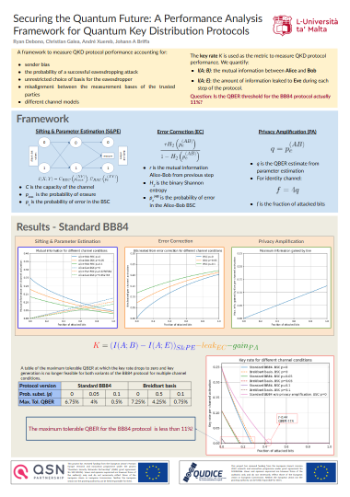
Mr Ryan Debono, PhD student in the Quantum Communications Research Group, has presented a poster titled 'Securing the Quantum Future: A Performance Analysis Framework for Quantum Key Distribution Protocols' at the IQIS 2025 conference.
The poster presented a framework to measure QKD protocol performance accounting for an number of factors, including the sender bias, the probability of a successful eavesdropping attack, unrestricted choice of basis for the eavesdropper, misalignment between the measurement bases of the trusted parties, and different channel models.
As part of the analysis using this framework, it was also found that the maximum tolerable QBER for the BB84 protocol is actually less than 11% as often quoted in the literature.
We look forward to sharing more updates about Ryan's PhD work in the coming weeks and months!
Wednesday, 16 July 2025
-700x233.png)
Join us for an extraordinary day of collaborative coding and quantum innovation at the PRISM Hackathon: Collaborative Coding with Actual Quantum Devices.
This one-of-a-kind event offers IT professionals from software engineers to network engineers, cybersecurity specialists, and students the chance to work directly with cutting-edge Quantum Key Distribution (QKD) devices — the next frontier in secure communications.
This is far from your typical hackathon.
Rather than a competition, it’s an immersive educational experience, where you’ll build real solutions, test your code on actual quantum hardware, and develop your skills in one of the fastest-growing fields in technology.
Event Details:
Dive into a real-world challenge focused on quantum communications and QKD. With expert guidance, you’ll develop and refine your code before testing it against actual QKD devices — an opportunity rarely available outside specialised research facilities.
Our team of experienced mentors will be available throughout the day to support you, provide insights, and help you navigate the quantum coding challenge.
Collaborate with students, industry professionals, and technical specialists from some of Malta’s leading companies. Expand your professional network in a collaborative environment.
Strengthen your understanding of quantum communication systems, security protocols, and secure coding practices — all within a practical, real-world context.
Every participant who successfully completes the challenge will be awarded a Quantum-Themed Completion Prize— a unique keepsake to commemorate your involvement in this pioneering event.
Minimum requirements include having basic programming skills in Python or other high-level languages. Additionally, you will be required to bring your own device.
Whether you’re a seasoned professional or a talented student, this hackathon will expand your skills and give you a glimpse into the future of cybersecurity.
As part of the PRISM EuroQCI project, Malta is helping to lead Europe’s efforts to develop quantum-secure communication networks.
By participating in this hackathon, you will be among the first in the region to experience the reality of coding with real quantum devices — and contribute to the early building blocks of tomorrow’s secure digital infrastructure.
Secure your spot by filling in the registration form on the PRISM website.
Participation is free, but spaces are limited, and this is a rare opportunity to work hands-on with real quantum technology.
Saturday, 5 July 2025
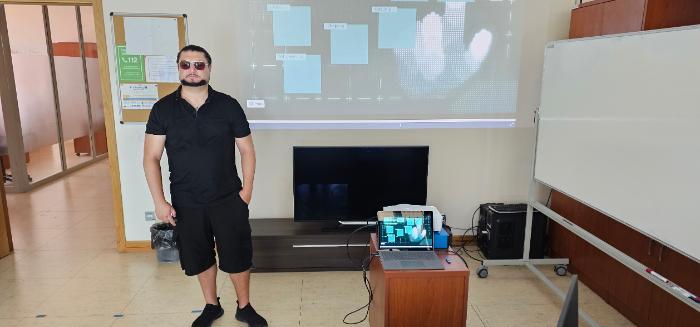
As part of the Faculty of ICT Expo, a series of talks was held to showcase the work carried out by the Faculty of ICT at the University of Malta.
The Open Labs series offered the public a chance to learn about ongoing projects and initiatives within the Department of Communications and Communications Engineering. Among the speakers was Dr Roberto Salazar, who presented an overview of the group’s activities in the field of quantum communications.
The event highlighted the commitment of both the department and the wider Faculty of ICT to cutting-edge research and to engaging the wider community with emerging technologies.
Wednesday, 18 June 2025

Dr Roberto Salazar, a postdoctoral researcher in the Quantum Communications Research Group, recently delivered a guest talk at Palacký University Olomouc, Czechia, at the invitation of Prof. Vlad Usenko.
In his presentation, Dr Salazar provided an overview of the group’s ongoing work, with a particular focus on his research into entropy accumulation. The talk sparked significant interest and led to an engaging discussion with the audience.
We extend our sincere thanks to Prof. Usenko for the kind invitation and look forward to continued collaboration in the future.
Tuesday, 3 June 2025

Prof. Johann Briffa, Principal Investigator within the Quantum Communications Group, was interviewed by Josef Bonello on NET TV's 'Ġimgħa b'Ġimgħa' programme. During the discussion, Prof. Briffa provided an overview of the main quantum technologies, with a focus on communications, the meaning behind the term "quantum," and the work being done in Malta through a number of projects, such as the PRISM project.
The interview is the latest in efforts by the Quantum Communications research group to broaden the knowledge of the general public about quantum technologies, its importance, and what is being done at national and international levels.
Tuesday, 27 May 2025
-700x210.png)
The annual University of Malta Research Expo allows researchers the opportunity to share their progress, ideas, and breakthroughs with the UM community, encouraging further collaboration and sharing of ideas.
This year, two PhD students within the Quantum Communications Research Group will be presenting the work in their respective fields: Mr Aaron Abela's presentation is titled 'A Comparative Study of Information Reconciliation Schemes for Continuous Variable Quantum Key Distribution', while Mr Ryan Debono's presentation is titled 'Securing the Quantum Future: A Key Rate Framework for Quantum Key Distribution Protocols'. More details may be found on UMRE's website.
The presentations will be held between 12:25 pm and 1:05 pm, as part of the day-long event. The event will also be live-streamed, allowing those who are unable to attend the event to follow proceedings.
Monday, 21 April 2025

The PRISM EuroQCI project and the EU-Canada HYPERSPACE initiative are proud to announce the launch of a joint webinar series exploring the intersection of terrestrial and space-based quantum communication networks.
The first webinar in the three-part series, entitled “Deploying Quantum Networks on Land and in Space,” will be held on Tuesday, 7 May 2025 at 15:00 CET via Microsoft Teams.
The event will bring together leading voices in European and international quantum research to discuss how on-the-ground quantum testbeds are converging with pioneering work in satellite-based quantum communication. Together, these efforts are helping shape the future of secure digital infrastructure across Europe and beyond.
Featured Speakers:
Participants can expect a deep dive into:
The webinar is designed to be accessible to all knowledge levels — from those working directly in quantum technologies to policy professionals, infrastructure providers, and the simply curious. It serves as an entry point into how EuroQCI and associated initiatives are turning cutting-edge quantum physics into real-world communications security.
Registration is free and open to the public.
Register here: PRISM-Hyperspace Webinar
About PRISM EuroQCI
PRISM is Malta’s national quantum communications project (NatQCI) under the European Commission’s EuroQCI initiative. Coordinated by RSM Malta and carried out in collaboration with Merqury Cybersecurity, Melita, the University of Malta, MITA, UMNAI, and the Ministry for Home Affairs, Security and Employment through the Critical Infrastructure Protection Department, PRISM is building a testbed QKD network while supporting community-building, awareness, and education around post-quantum security. The project is co-funded by the European Union under the Digital Europe Programme grant agreement number 101111875.
About HYPERSPACE
HYPERSPACE (HyperEntanglement in Space) is an EU-Canada collaborative research project pushing the boundaries of space-based quantum communication. By testing hyperentangled photon systems via satellite, the project supports the long-term goal of secure intercontinental quantum networks.
Thursday, 10 April 2025
A new paper by the Quantum Communications Research Group is available on arXiv, titled 'SVTest: general purpose software for testing weakly random sources with exemplary application to seismic data analysis enabling quantum amplification,' authored by Maciej Stankiewicz, Roberto Salazar, Mikołaj Czechlewski, Alejandra Muñoz Jensen, Catalina Morales-Yáñez, Omer Sakarya, Julio Viveros Carrasco, and Karol Horodecki.
Abstract:
Generating private randomness is essential for numerous applications ranging from security proofs to online banking. Consequently, the capacity of quantum devices to amplify the privacy of a weak source of randomness, in cases unattainable by classical methods, constitutes a practical advantage. One of the theoretical models of such weak sources are the so-called Santha-Vazirani (SV) sources; however, finding natural sources satisfying the SV model is a paramount challenge. In this article, we take three significant steps on the way to simplify this hard task. We begin with an in-depth analysis of the mathematical background for estimating the quality of a weak randomness source by providing a set of axioms that systematize the possible approaches to such estimation. We then develop software (SVTest) to estimate the parameter characterizing the source's randomness. The software is general-purpose, i.e., it can test the randomness of any target sequence of bits. Later, we apply the software to test seismic events (earthquakes and local noise) as potential sources of randomness. Our results demonstrate that seismic phenomena are possible sources of randomness, depending on the choice of discretization. Therefore, our work provides strong evidence of the potential of geophysical phenomena as a source of cryptographic resources, building an unprecedented bridge between both fields.
Friday, 28 March 2025
As part of the Faculty of ICT’s outreach initiatives, the Quantum Communications Research Group recently participated in a workshop aimed at introducing secondary school students to cutting-edge research in quantum communications. The event also highlighted how subjects studied at school can pave the way for careers in ICT.
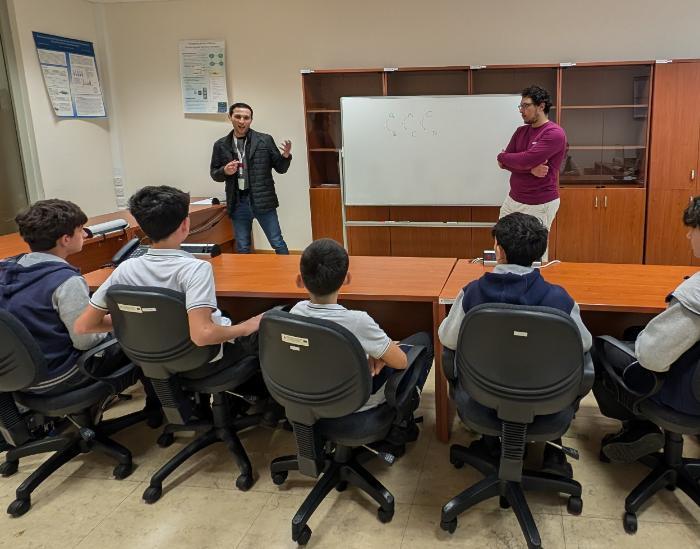
Around 30 students from San Andrea School (Year 11) and Stella Maris College (Year 9) took part in the session, where they were introduced to the fundamentals of cryptography, the importance of secure communications, and the role of quantum technologies in enhancing security. The workshop covered key topics such as Quantum Key Distribution (QKD) and ongoing efforts in Malta, particularly within the PRISM project to develop a QKD network and within the SQUIRE project to improve the efficiency of error correction codes on embedded devices, and abroad in projects such as QSNP and QUDICE.
To make the session interactive, students participated in a hands-on activity where they attempted to decipher a message encrypted using the Caesar cipher. This exercise provided a practical introduction to cryptography and underscored the need for more advanced security schemes in the digital age.
We look forward to engaging with more students at future events and continuing to inspire the next generation of ICT professionals!
Thursday, 13 March 2025
Dr Ing. Trevor Spiteri from the Quantum Communications Group attended the De La Salle Careers Day, where around 120 students of De La Salle College in grades 8-11 (12-16 year-olds) could get a taste of the various careers that they could pursue following their studies.
-700x933.jpeg)
Part of the Faculty of ICT's stand, Dr Ing. Spiteri demonstrated how the Caesar cipher and Jefferson wheel cipher worked, and provided information on the general field of cybersecurity and QKD. Students also had the opportunity to ask questions.
We hope that at least some of the students will pursue careers in ICT, particularly in computer science, and work in the field of cybersecurity in the years to come!
Tuesday, 11 February 2025
The Science section in the latest edition of The Sunday Times of Malta, one of the leading newspapers in Malta, has been dedicated to quantum communications, prepared by the Quantum Communications Research Group.

Several interesting pieces of information are given, including debunking of common myths, alongside the projects being worked upon by the group.
The article may also be viewed on the Times of Malta website.
Friday, 24 January 2025
The University of Malta hosted the second progress meeting of the ANQuOR project on the 22nd and 23rd of January, at the historic Valletta Campus.
Over the course of the two-day event, participants provided updates on the project's key activities, which focus on exploring and demonstrating quantum key distribution (QKD) for military applications.
In addition to the productive discussions, attendees had the opportunity to explore Maltese history and culture. The group visited the National War Museum at Fort St Elmo, tracing Malta’s rich history from prehistoric times and the era of the Knights of Malta to its role in the World Wars and its independence from British rule. Participants also enjoyed traditional Maltese cuisine at local restaurants.
The next progress meeting is scheduled to take place in Austria, and we look forward to another fruitful gathering and exciting updates.

Thursday, 23 January 2025
The paper titled 'PRISM: Malta's quantum key distribution test-bed network' has been accepted as part of the International Conference on Quantum Communications, Networking, and Computing (QCNC 2025) being held between 31 March and 2 April at Nara, Japan!
The paper provides an overview of the PRISM architecture, implementation, and deployment, including research activities being carried out by the Quantum Communications Research Group at UM. This paper is the second by the group to be accepted as part of the QCNC conference, following the acceptance of the paper titled '' last year.
The abstract and link to the paper will be made available soon. Stay tuned!
Friday, 29 November 2024
The third edition of Unconventional Science Careers Day was held at the University of Malta on 28-29 November, where 11-12 year-old students (Year 8) and their educators were invited to explore career opportunities that are not necessarily linked to traditional professions.
Several laboratories and other areas at UM were opened to students and educators, spanning areas such as Engineering, Health Sciences, and Medicine and Surgery.
Students also visited the Faculty of ICT, where a number of projects and demonstrations were on display. The Quantum Communications Research Group was also present, providing a high-level overview of cybersecurity, QKD, and the work being done in the area of quantum communications. This included an overview of the PRISM project involving the implementation of a nation-wide network as part of the EuroQCI initiative. Students also participated in an activity where they were asked to try and decipher a message encoded using Caesar cipher.

We had a great time explaining our work to all attendees, and look forward to the next event!
Friday, 1 November 2024
The Quantum Communications Research Group has been granted funding by Science Malta and the Malta Digital Innovation Authority, through the ‘R&I Thematic Programmes: Digital Technologies Programme' for a new project, the Secure QUantum Information REconciliation (SQUIRE) project.
SQUIRE aims to develop more efficient error correction codes for embedded devices, building on GPU-accelerated simulations at the University of Malta. The project will collaborate with LuxQuanta, a leading QKD company, which will provide access to raw data from commercial CV-QKD systems and offer advisory support on requirements. Additionally, SQUIRE will integrate these advancements into the post-processing stack being developed in the PRISM project, which is implementing Malta's national European quantum communications infrastructure, thereby gaining practical feedback from a high-TRL environment.
Through the involvement of Merqury Cybersecurity, which leads the technical work on the PRISM project, insights from real-world experience will strengthen the developed artefacts for practical applications. This collaboration will accelerate the development of secure, real-time QKD systems, enhancing data security across critical sectors and advancing quantum communication technologies.
Please check out the newly launched SQUIRE website for more information and to view the latest updates.
Thursday, 31 October 2024

Malta will be at the forefront of quantum technology advancements this December, as the University of Malta hosts PRISM Quantum Week from 2nd to 5th December 2024. Organised by the PRISM EuroQCI consortium, this significant event will bring together international leaders, experts, and quantum enthusiasts to explore the cutting-edge developments in quantum-secured communications.
The highlight of the week will be the Open Forum on Thursday, 5th December, an all-day event held at the University of Malta’s Valletta Campus. Open to professionals, students, and anyone passionate about quantum technology, the Open Forum will provide a comprehensive look into the future of quantum-secured communication. Attendees will have the opportunity to participate in engaging talks, poster sessions, and networking activities, designed to foster collaboration and knowledge exchange in this rapidly evolving field.
The program for the Open Forum includes:
While the ETSI (European Telecommunications Standards Institute) meeting will take place from 2nd to 4th December, closed to ETSI members only, PRISM Quantum Week offers a rare chance for ETSI members and select representatives from EuroQCI projects to witness quantum technologies in action through a private data centre demonstration on Tuesday, 3rd December. This session will showcase real-world applications of quantum key distribution (QKD) technologies, providing a unique opportunity to observe how these advancements can secure critical communications infrastructure.
PRISM EuroQCI, Malta’s flagship project in quantum-secured communications, is backed by a consortium of Maltese entities, namely RSM Malta, Merqury Cybersecurity, Melita, UMNAI, the University of Malta, the Malta Information Technology Agency and the Critical Infrastructure Protection Directorate. Together, they aim to position Malta as a leader in the EuroQCI initiative, contributing to the creation of a Europe-wide quantum-secured network by 2030.
Event Details:
PRISM Quantum Week will be a ground-breaking event that is not to be missed, promising an unparalleled opportunity to learn, connect, and explore the ground-breaking potential of quantum-secured communication.

Thursday, 31 October 2024
Radio Mocha, a program about science aired on the 'Radju Malta' radio station, recently interviewed Prof. Johann Briffa and Dr Ing. Christian Galea.
The discussion, led by Danielle Martine Farrugia, centred around the what are quantum computers, the implications on secure communications, and the work currently being done by the group in this area. An overview of the projects, namely QUANGO, QUDICE, QSNP, PRISM, and an exciting new project, was provided.

The full interview can be found on the TVMi website. We thank Danielle for the invitation, and look forward to the next one!
Tuesday, 15 October 2024
A talk on Quantum key distribution (QKD) was recently held one of the project's partners at the Malta Café Scientifique event. The talk delved into the basics of quantum communication, including quantum entanglement and quantum key distribution (QKD), and how how these concepts are transforming secure communication technologies.
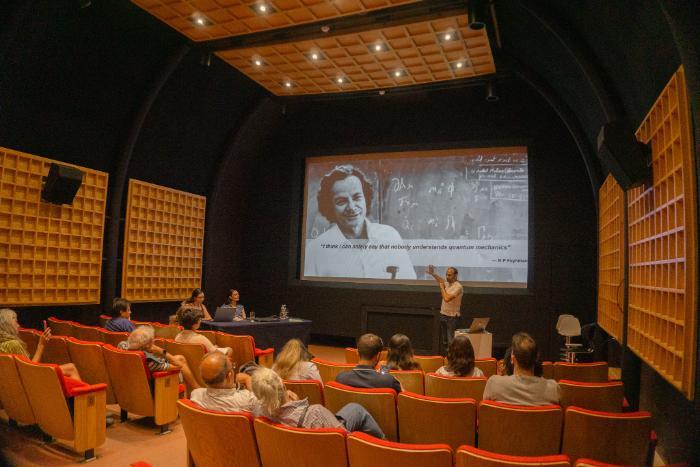
The discussion also focused on PRISM’s pioneering efforts in Malta, significantly advancing beyond traditional methods to ensure unmatched security and data integrity. The presentation also covered PRISM's alignment with the EuroQCI initiative, detailing the project's ambitious plans to establish a quantum-secured network in Malta.
The proposed infrastructure was also discussed, along with strategic QCI node locations and the cutting-edge technologies involved. The broader implications for various industries were also explored, highlighting how this innovative network can revolutionise sectors with enhanced security and reliability.
.jfif)
Thursday, 17 October 2024
Dr Ing. Trevor Spiteri attended the 2024 edition of TechXpo Malta, an event focusing on AI and the digital transformation.
Attendees, ranging from students to professionals, were invited to decrypt two messages using two cryptographic tools. This activity demonstrated the need for encryption, the importance of knowledge in computer science, and why QKD will be necessary to ensure secure communications.

Thursday, 26 September 2024
The Quantum Communications Research Group will be at this year's edition of Science in the City, Malta's national science and arts festival.
Attendees will attempt to crack encrypted messages using two different devices - a Caesar cipher and a Jefferson Wheel Disk. Information on QKD and related projects, in particular the PRISM project where a quantum-secured network is being set up in Malta, will also be given.
The group will be at the Faculty of ICT's stand, in the VR and Technology section at Pjazza Tritoni, on Friday 27 September between 18:00 and 20:00. We hope to see you there!

Friday, 2 August 2024
Dr Roberto Salazar, a postdoc in the Quantum Communications Research Group, was invited to deliver a talk as part of a virtual seminar in the series organized by the Quantum Information group at the Institute of Physics at the Instituto de Física la Plata (IFLP). Details of the talk were as follows:
Title: Fundamentals of Resource Theory
Description: This presentation introduces the fundamental concepts of resource theories. Firstly, we discuss the motivations behind and the impact of these theories on quantum information. Then, we provide an intuitive overview and illustrate the concepts with simple examples from classical resources. Finally, we mention some current research areas within this theoretical framework.

Monday, 29 July 2024
The Quantum Communications Summer School held at the University of Malta has come to a close. Organised by PRISM EuroQCI and held between 22 and 26 July, the Summer School brought together academics, industry professionals, and students to explore the rapidly evolving field of quantum communications.
Participants were provided with a blend of theoretical knowledge and practical experience, covering key areas of quantum mechanics, quantum key distribution (QKD), linear algebra, error correction, and insights on the future of QKD. Three of the group's members, namely Prof. Johann Briffa, Prof. André Xuereb, and Mr Ryan Debono, provided four of the lectures in the summer school.
The event provided a unique opportunity for participants to gain hands-on experience, network with experts, and explore the future potential of quantum communications. Plans are already being developed for future events; stay tuned!
Monday, 29 July 2024
As part of the FICT Final Year Project (FYP) exhibition, the group was interviewed to provide an overview of the work done. You may view it below (the interviews of the group's members start at 2:56):
.jpg)
Friday, 19 July 2024
Dr Roberto Salazar, the new postdoc in the group, will be delivering a talk organised by Quantumalta on Dephasing Superchannels on Wednesday, 24th July 2024. More information as follows:
Date: Wednesday 24th July 2024
Time: 10:00
Venue: MP225, Maths and Physics Building, University of Malta
Speaker: Dr Roberto Salazar
Talk Title: Dephasing Superchannels
Abstract: This presentation will introduce the latest general model for dephasing noise in quantum channels. We will delve into the comparisons and contrasts between this type of noise and quantum states' dephasing. Additionally, we will illustrate its significance in quantum resource theories and how it affects the operational definitions of channel coherence. We will mention the recent experimental test of our predictions and subsequent analysis. Finally, we will explore open questions and potential applications of this model.
We hope to see you there!
Monday, 15 July 2024
The Quantum Communications Summer School is an opportunity for anyone interested in the sector to gain an insight into the different aspects of quantum communications. The summer school will be held at the UM Msida Campus between 22nd and 26th of July 2024. It will be held in the afternoon, between 13:00 and 17:30 to provide added convenience to any working professionals who wish to join.
Attendees will be guided by academics and industry professionals to explore different thematic areas that make up quantum communications, including quantum mechanics, QKD protocols, error correction and QKD beyond point-to-point networks. Each day of the summer school will consist of a two-hour lecture, followed by a two-hour practical session. Refreshments will be served between sessions on each day. A certificate of attendance will be awarded upon the successful completion of the course.
Registrations are currently open, but it is encouraged to apply soon since places are limited.

Friday, 5 July 2024
Ryan Debono, a PhD student and researcher within the group, delivered a presentation at the annual UM FICT Expo being held today and tomorrow.
An introduction to cryptography and the vulnerability of current encryption schemes by quantum computers was provided, along with an overview of the two main solutions, namely Post-Quantum Cryptography (PQC) and Quantum Key Distribution (QKD). The work being done by UM as part of European projects, composed by numerous entities across the EU, was also provided.
An article on the team and its work was also published in the FICT Final Year Projects 2024 publication.
The talk by Ryan may be viewed in the video published by the Faculty of ICT on Facebook (starting at approximately 2:21:25).
Thursday, 4 July 2024
A new postdoc, Dr Roberto Salazar, has joined the Quantum Communications Research Group and will contribute to the analysis and development of Quantum Key Distribution protocols.
Roberto Salazar obtained his PhD from the University of Concepcion, Chile. His thesis's primary subject was tomography and discrimination of quantum states under the supervision of Prof. Aldo Delgado. Afterward, he moved to Poland for a Postdoctoral research position at the University of Gdansk. He worked with Prof. Paweł Horodecki and Prof. Karol Horodecki on diverse topics of quantum information, such as quantum nonlocality, quantum cryptography, quantum randomness amplification, and the emergence of objectivity. Later, in 2020, he moved to Krakow to join the group of quantum resources led by Dr Kamil Korzekwa at Jagiellonian University. In Krakow, he worked closely with Prof. Karol Życzkowski and focused on quantum resources for communication and quantum channels.
Monday, 1 July 2024
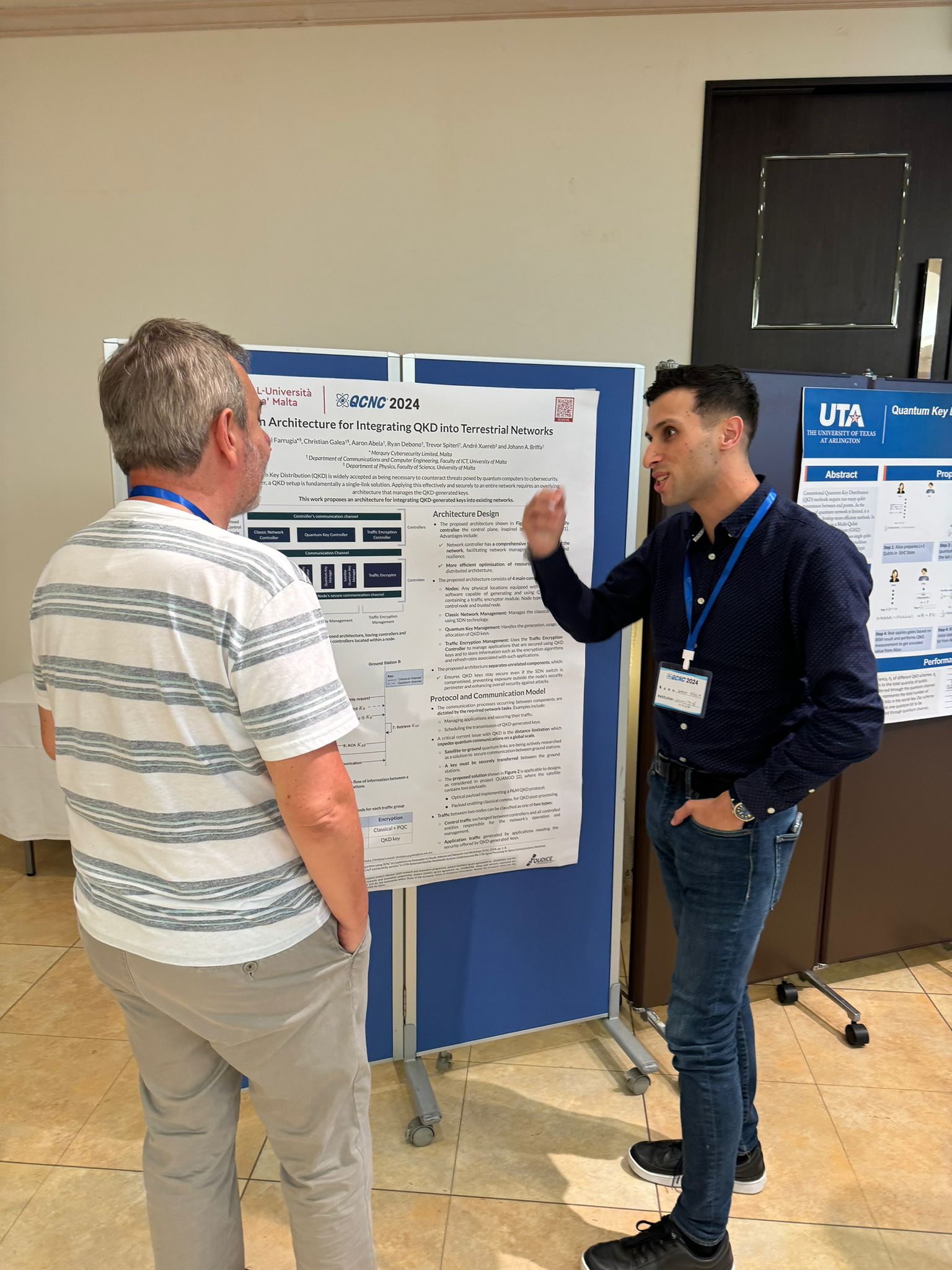
Following the acceptance of a paper in the QCNC 2024 conference proceedings, one of our PhD students, Aaron Abela, presented a poster on the paper.
The conference, being held in Kanazawa, Japan, provides a forum for academic researchers and industry practitioners to present research progresses, exchange new ideas, and identify future directions in the field of Quantum Communications, Networking, and Computing.
A number of participants showed interest in the poster, with Aaron elaborating further on the work done by the team.
We look forward to the next event!
Thursday, 6 June 2024
Dr Trevor Spiteri and Dr Ing. Christian Galea attended two events related to the QSNP project in Barcelona, Spain.
The first event, held on 5 June and titled ‘Quantum Communications in Europe: Building the next generation of European Quantum Technologies’, was a joint event between the QSNP project and QIA, gathering around 150 experts, researchers and industry leaders in the field of quantum communication technologies.
QSNP is a European Quantum Flagship project that aims to develop quantum cryptography technology to secure the transmission of information over the internet, for future deployment in EuroQCI and private Telecom sector. QIA is building the world’s first full-stack quantum internet prototype network.
QSNP and QIA members were joined by representatives from the European Commission, the Spanish Government, White House Office of Science and Technology Policy, and Japan's Quantum ICT Collaboration Center. More details can be found on the project's website and LinkedIn pages.
The second event, held on 6 June, comprised the third general assembly of the QSNP project, where updates on the work being done in the project were given by all partners, including UM. For more information, please visit the QSNP website.
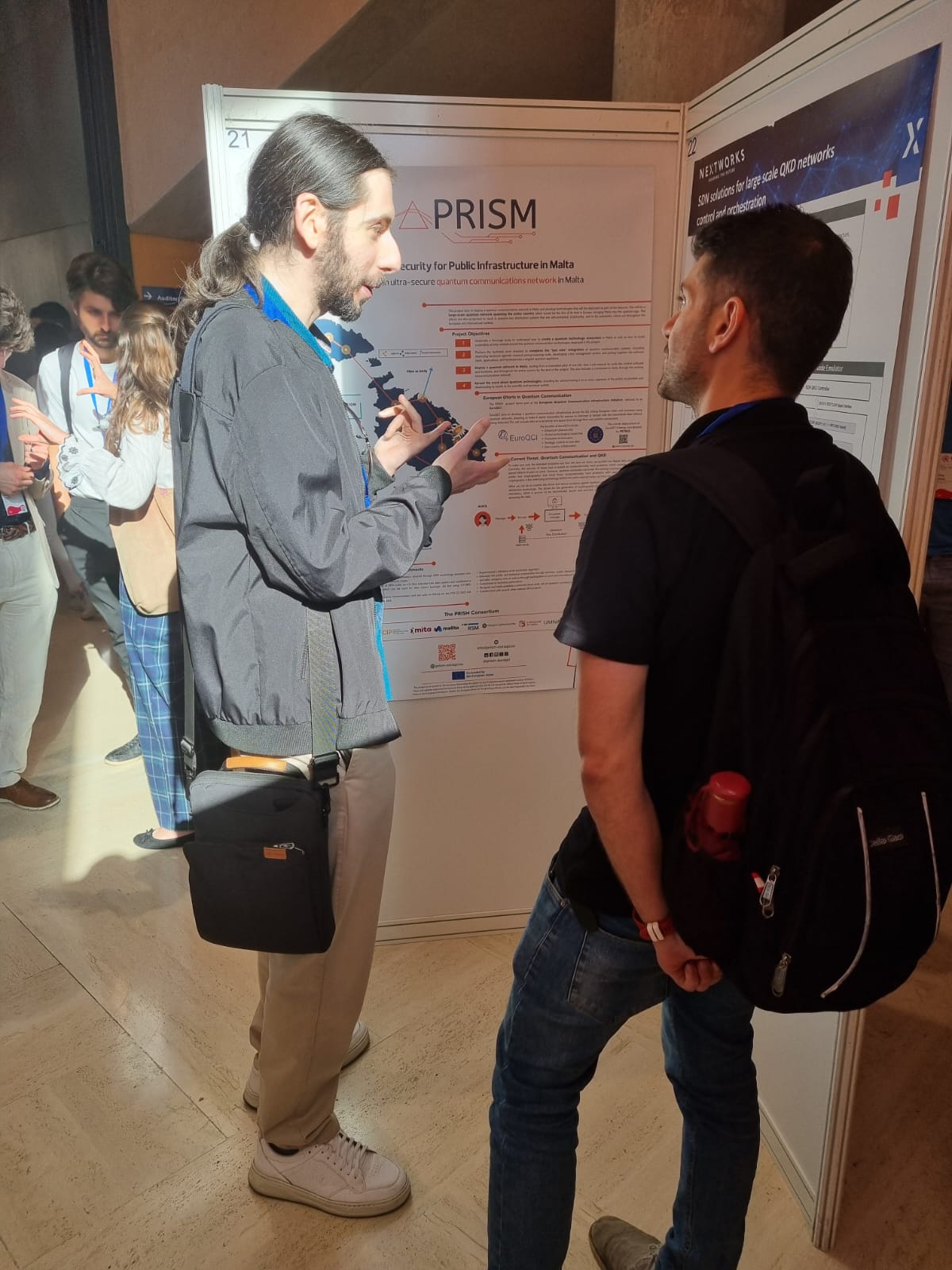
A poster on the work being done in the PRISM project was also presented at both events, where a number of participants showed interest in the work being done in the project.
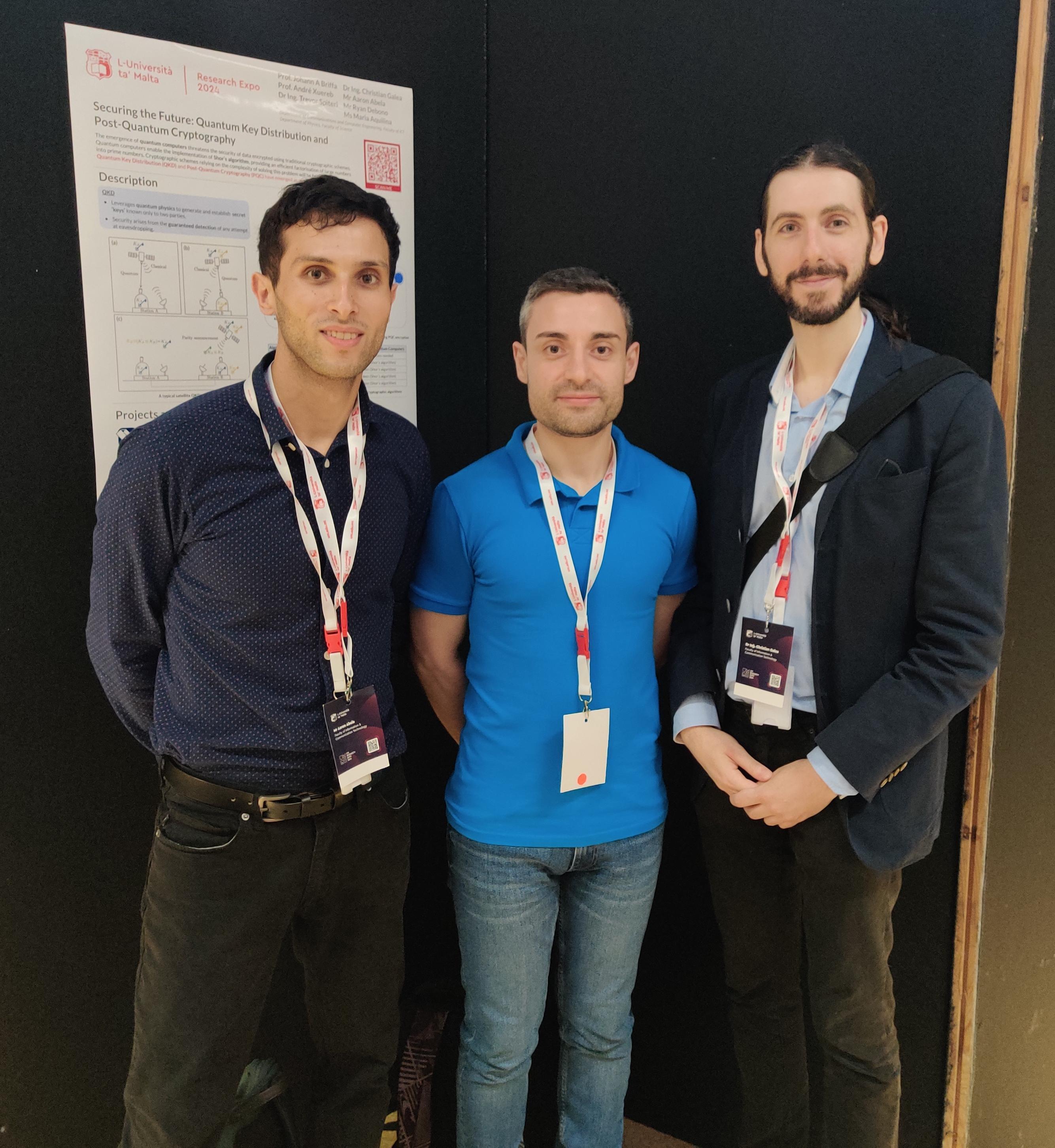
Wednesday, 29 May 2024
The Quantum Communications Research Group presented a poster at the second edition of the University of Malta Research Expo.
The aim of the UMRE 2024 is to give researchers from UM the opportunity to network and showcase their research activities with the wider UM community. By coming together and celebrating their work, UMRE 2024 serves as a meeting point where ideas can be shared and cross-pollinated in an interdisciplinary forum.
In this year’s event, the team presented a poster on quantum and post-quantum cryptography, and information on the work being done in projects within which UM is a partner.
A number of participants showed interest in the work being done by the team, spanning academics, researchers, and students. We look forward to the next event!

Thursday, 9 May 2024
The paper titled 'An Architecture for Integrating QKD into Terrestrial Networks' has been accepted as part of the QCNC 2024 conference being held between 1-3 July in Kanazawa, Japan!
The paper proposes an architecture for the integration of QKD-generated keys into existing networks, taking into consideration long-distance QKD enabled via satellite networks.
The paper will be presented by Aaron Abela, one of the team's PhD students. We look forward to seeing you there!
Paper abstract:
Quantum Key Distribution is widely accepted as being necessary to counteract threats posed by quantum computers to cybersecurity. However, a QKD setup is fundamentally a single-link solution. Applying this effectively and securely to an entire network requires an overlying architecture that manages the QKD-generated keys. This paper proposes an architecture for integrating QKD-generated keys into existing networks. It presents a logically centralised design, a communication model, and recommendations, offering guidance for teams developing their QKD architecture.
The full paper may be viewed on IEEE Xplore or in OAR@UM.

Thursday, 8 February 2024
Prof. Johann Briffa and Dr Ing. Christian Galea attended the 'Advancing QKD from theory to technology Workshop' held as part of the QSNP project. The focus of this workshop was on the advancement of QKD security proofs, and the modelling and implementation, including system simulation tools. The partners of the project, including UM, presented the work being done along with plans for future research and development.