
NOurishing PROBiotics to Bees to Mitigate Stressors
Duration: January 2018 - June 2023 (54 months)
The NO PROBleMS project originates from a number of acquired knowledge on honeybee nutrition based on beneficial bacteria and plants extracts.
Plant extracts are widely used in a number of commercial products targeted to honey bees, their use against N. ceranae has scientific support, but posology is usually unclear. The use of plants extracts has great potential as mitigating agents in the presence of environmental stressors.
The combined use of beneficial microorganisms and plant extracts to boost honeybees' health and productivity is the main goal of the NO PROBleMS project.
The specific objectives of the relevance of NO PROBleMS are therefore to:
PhD student: Ms Simone Cutajar
Project coordinator: Prof David Mifsud
Project Partners:
Funding: European commission Marie Skłodowska-Curie Actions (MSCA) Research and Innovation Staff Exchange (RISE) Grant number: 777760
Project budget: € 346,500.00 (€ 45,000.00 allocated to Institute of Earth Systems)
Links: EU Website, Project Website
Fighting Alien Species Transborder
Duration: November 2020 - September 2023 (33 months)
The FAST project is funded under Interreg V-A Italia-Malta 2014-2020 call 2/2019 - Priority Axis III - Protecting environment and fostering efficient use of resources. Specific objective 3.1- Contribute in stopping the terrestrial and marine biodiversity loss within the area by maintaining and restoring the ecosystems within the protected areas.
Research Support Officers: Mr Thomas Cassar, Mr Arthur Lamoliere
Scientific advisor: Ms Simone Cutajar, Mr Stephen Mifsud, Prof Sandro Lanfranco
Project coordinator: Prof David Mifsud
Project Partners:
Total Budget: € 1,559,120.00 (€ 1,260,227.00 ERDF Contribution Budget, € 485,199.95 allocated to Institute of Earth Systems)
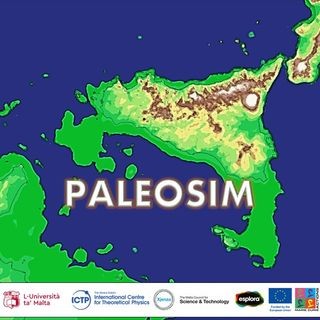
PALEOclimate modelling of Small Islands in the Mediterranean and possible impacts on arthropod habitats
Duration: August 2022 - January 2025 (30 months)
PALEOSIM is a Marie Skłodowska-Curie Actions Postdoctoral Fellowship focusing on the climate and Land-Use Change impacts on arthropod habitats of small islands using a Regional Climate Model.
Arthropods play vital roles in the ecosystem (e.g., pollinators, decomposers, and others), and thus can act as indicators of ecosystem integrity. Recently, the anthropogenic impact on ecosystems, through climate change and LUC, has been devastating, especially in vulnerable regions such as the Mediterranean Basin and its numerous small islands. Advances in RCMs have resulted in extensive climate studies of the region at 12.5 km resolution; however, this is a coarse resolution for many small islands. The introduction of Convection Permitting (CP) RCM simulations allows models to resolve islands such as the Circum-Sicilian (including the Maltese) Islands (CSI), and hence study variations in arthropod habitats induced by climate change.
PALEOSIM is a multidisciplinary investigation of the climate and associated arthropod habitats in the CSI. For the first time, the RegCM can combine the CP and Paleoclimate modes to produce 2 km resolution simulations between 21000BCE and 2100CE. This span of time is characterised by slow climate and geomorphological variation at the beginning, and rapid anthropogenic climate change and LUC at the end. The paleoclimate simulations will shed light on the role humanity has played in the ecological destabilisation of many of these small islands.
This investigation will improve our understanding of past climate changes on the CSI, and showcase the potential of small islands RCM simulations. The project will provide new insight into the expected habitat changes arthropods may experience in the future, and help mitigate the destruction of these fragile ecosystems.
Marie Curie European Research Officer: Dr James Ciarlo.
Project Coordinator: Prof David Mifsud
Project Partners:
Funding: Marie Skłodowska-Curie Actions (MSCA) Posdoctoral Fellowship (PF) Grant number: 101062427
Project Budget: € 219,628.40
Links: EU Website, UM Project Page
Pathogens and the Apis mellifera ruttneri Microbiome
Investigating the Microbiome of Maltese Honeybees and Their Interaction with Pathogens
Duration: July 2023 - June 2024 (12 months)
The PAM project aims to deepen our understanding of the unique microbiome of the Maltese honeybee subspecies, Apis mellifera ruttneri, and its interaction with various pathogens. This research is critical for improving the health and resilience of honeybee populations, which are vital for global biodiversity and agriculture.
Honeybees face numerous threats from biotic and abiotic factors, including pathogens, climate change, and habitat loss, leading to significant population declines. In Malta, the honeybee population has decreased by over 60% in the past 20 years, threatening the nation's agricultural productivity, with 15% of total produce dependent on pollination services. Recent research highlights the crucial role of the honeybee gut microbiome in modulating immunity against pathogens and maintaining overall bee health.
Project Objectives:
PhD student: Ms Simone Cutajar
Project coordinator: Prof David Mifsud
Project Partners: Alma Mater Studiorum - Universita Di Bologna – UniBo.
Funding: IPAS+ - Option C - PRIMA Training and Mobility Award 2023 (PTMA) of the Malta Council for Science and Technology (for travel and dissemination costs) and by the Tertiary Education Scholarship Scheme (TESS) (for PhD bench fees).

Resilient beekeeping and breeding to safeguard natural genetic resources and pollination services
Duration: October 2023 - September 2027 (48 months)
BeeGuards aims to strengthen the resilience of the European beekeeping sector by providing sustainable management practices, novel breeding strategies and digital and forecasting tools that allow the sector to adapt to a changing environment. We focus on determining how abiotic factors such as management practices, climate change, nutrition and resource limitations drive emerging biotic stressors that threaten colony health and erode the resilience of European beekeeping.
PhD student: Ms Simone Cutajar
Research Support Officers: Mr Matthew Calleja, Mr Arthur Lamoliere
Project coordinator: Prof David Mifsud
Funding: EU funded project under the Horizon Europe framework (HORIZON-CL6-2022-BIODIV-02) with a consortium made up of 27 partners (from 16 countries) and coordinated by the Italian Agricultural Research Council (CREA).
Links: Website

Duration: December 2023 - November 2025 (24 months)
The BEE-OPTECH4Honey project focuses on enhancing honey production quality through the optimization of honeybee foraging sites and beehive transhumance routes using ICT and a GIS-based model. These tools will utilize real-world data to identify ideal locations for nectar sites and optimal migratory routes, thereby increasing the efficiency, productivity, and sustainability of beekeeping in Malta and Türkiye.
This project's key objectives are:
This collaborative project will involve researchers and stakeholders in both Malta and Türkiye and aims to provide a comprehensive solution to modern challenges in beekeeping, including the impacts of climate change and urbanization on traditional beekeeping practices. The anticipated outcome is a robust and versatile system that can be deployed in real-world scenarios.
Research Support Officer: Mr Matthew Calleja, Mr Arthur Lamoliere
Project coordinator: Prof David Mifsud
Project Partners: Işık University, Istanbul, Türkiye.
Budget: € 99,995.24
Funding: Malta Council for Science and Technology and the Scientific Technological Research Council of Turkey (TÜBITAK) through the MCST-TÜBITAK 2023 Joint Call for R&I projects. This initiative is part of the PRIMA Programme supported by the European Union.
Links: Website, Youtube, Instagram, LinkedIn, Facebook, X
Upcoming event: On the 20th of November, we will be holding a half-day BEE-OPTECH4Honey seminar at Juventutis Domus Sacra Familia in Żejtun (2:00–7:00 PM). See the program here: BeeOptech Nov Seminar [PDF]. Access the following link to register: https://bit.ly/4hFCuF0
Modelling for Enhanced Beekeeping Carrying Capacity
Duration: November 2024 - April 2026 (18 months)
The increasing global challenges facing beekeeping, such as climate change and habitat loss, have underscored the critical need for sustainable practices to ensure the health and productivity of honey bee colonies.
The BeeSustain project, conceived at the University of Malta, addresses the urgent problem of optimising honey bee colony placement and enhancing beekeeping carrying capacity through an integrative approach. Leveraging advanced climate and environmental modelling, microbiome analysis, and multispectral drone imagery, the project aims to revolutionise traditional beekeeping methods. The research is pivotal in its aim to create a dynamic, integrative model to improve the accuracy and reliability of carrying capacity assessments for beekeeping. Importantly, this project is structured to progress up to Technology Readiness Level 4, focusing on the development and lab validation of a predictive model.
It is the initial step toward a future where beekeepers can utilise real-time data for optimal colony management, thus fostering healthier bee populations and more efficient honey production. BeeSustain stands at the intersection of environmental science, apiculture, and technology, offering a scientifically grounded solution to improve beekeeping sustainability and ecosystem services.
Research Support Officer: Dr James Ciarlo`
Project Coordinator: Prof David Mifsud
Funding: Xjenza Malta Research Excellence Program (REP) 2024
Survey for the presence of Apis florea in Malta
Start Date: January 2025
In 2024, the Asian red dwarf honeybee (Apis florea) was recorded for the first time in Europe, in southern Malta. Given the potential ecological risks, including competition with native species and disease transmission, a preliminary survey was conducted in early 2025 to determine whether the species has established itself on the island.
A multidisciplinary team, including researchers from BERG and international collaborators, carried out two field surveys between January and March 2025. The surveys involved systematic sampling and specimen collection across various sites, but no individuals of A. florea were detected.
Despite these findings, the possibility of undetected colonies remains, due to Malta’s favourable climate and nesting conditions. Ongoing monitoring and public engagement are planned to support future detection and management of this potentially invasive species.
Research Support Officer: Mr Matthew Calleja
Project Coordinator: Prof David Mifsud
Funding: Entomological Society of Malta (EMS)